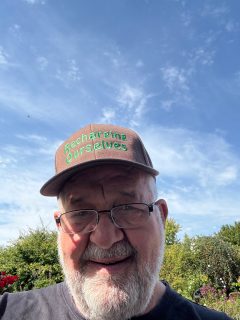
A Few Lessons in Compassion and Caretaking


                                    By Neal Lemery

            (Published in the Tillamook County Pioneer, 4/3/2025)

            This week, life gave me some perspectives of my role in community building and healing.  It was time for me to be in school, and to get reacquainted with taking a positive, proactive role, to quit my bellyaching and whining, and take some positive action. 

            A friend invited me to coffee, seeking some guidance and direction on their new role parenting a young relative.  They thought I had some wisdom on the subject, but I suspect they were more in search of affirmation and encouragement, with me as a cheerleader and proverbial optimist.  I can certainly play the role of cheerleader, and have the scars to prove I’ve played the role of a parent of teenagers.  

            Yet, I celebrate my role as parent, having just had a rich conversation with one of my sons this week. That unexpected phone call was filled with rich stories, laughter, and his comment that he had called “just to hear your voice”. Our talk about relationships, marriage, and our mutual desire to keep learning affirmed my thoughts that I’d done a decent job with him.  

            At coffee with my friend, I listened, commiserated, encouraged, and offered a few suggestions.  My friend thought I was a genius, as they acted on my ideas and found success and affirmation. My theory is that they instinctively knew the answers and the ideas had ripened and were well received.  They had done the hard work, and just needed to see they were headed in the right direction.  It’s not too hard to give a gentle nudge when people are already doing the right thing.

            It was a reflective week, as well.  A friend had given a talk about their passion in cleaning cemetery headstones, and helping families find their heritage, while sharing some nearly forgotten local history.  In that work, they celebrate the lives of those who have gone before us, and giving us all a sense of foundation and heritage.  

            I took that message to motivate me to visit my own family graves, and do some much needed maintenance and rehabilitation.  As I stood there in the cemetery, gently brushing off old leaves and debris and applying a cleanser to wash off decades of gunk, I took a good look at the names, and the dates of birth and death.  I ruminated over all the good times and hard times represented by the dashes between those dates, and the impact those ancestors had on me. 

            It was a time of contemplation, gratitude, and respect.  I hadn’t taken the time lately to acknowledge their contributions to my life and the importance of the ancestors’ various roles in their raising of me.  Like most of us, I get caught up in the daily busyness and worries, and ignore who I’ve become and why.  A lot of that comes from those family members whose headstones I was cleaning. A few tears came, and also a flood of good memories and gratitude.  

            These days are abundant in harsh words and comments, with people taking the opportunity to be snide, hostile, and even indifferent to another person’s crisis.  The daily news cycle overflows with crisis and uncertainty. I’m trying to limit my exposure to social media and its recent abundance of nastiness, and political discussions having a dominant theme of adversity and opposition. I want all that clamor to instead be a vehicle for addressing challenging community needs.  

            I left the cemetery, and that coffee shop after seeing my friend, with a new sense of gratitude and peace, knowing that in life, we do a lot of good things, and help a lot of people on their own walks in life.  The daily news cycle may seem important to people now, but knowing that I’ve been both the giver and the recipient of good thoughts, support, and kindness is worthy of my celebration and thanks.  That’s where I need to put my focus and my love.

4/2/2025

Komorebi


 (published in the Tillamook County Pioneer, 2/17/2025)

(Komorebi: The interplay of light and leaves as the sun shines through the trees.)

Into this place, this space
Open to light, streaming, flowing
Straight light, angled, shaded, scattered in part 

By and through
Leaves of trees, trunks, and limbs Dancing onto the ground, my face
In all the colors in this place.
Quiet here, except birdsong and breeze, All that is not human,
And leaves, rustling, murmuring Gathering and scattering the light.
I take it all in, absorbing
Marveling,
Me only a small insignificance,
A mere witness
To magnificence,
Awe.
No word in my language to describe it
I rely on the Japanese
Komorebi
—Neal Lemery 3/28/2023 

When I am in need of quiet and contemplation, space to sort things out and re- gain my perspective on life, or simply work through a difficult and challenging prob- lem, I take myself to the forest. I seek out the quiet, off the “beaten path” places, and look to immerse myself into that experience, into what I call the purity of nature. 

Unpolluted by human activity, the real forest experience seems uncomplicated, where time takes on a different existence, where process is not measured by modern culture, but by the incremental pace of natural life. 

“Slow down” is the message I soon experience, until I start thinking that my hu- man concept of time is actually toxic, harmful to other life forms. And after I move into the “slow down” mode, I start listening. I listen and begin to hear the silence, and then the subtle sounds of forest life and being. A breeze in the trees, a bird song, the al- most inaudible sound of a small twig falling or the faint sounds of moving water. The chaos and sound clutter of modern life ebbs away, and I am left to again discover the calm of natural sounds, and the rhythm of the real world. 

In the quiet, I hear myself breathe, hear my footsteps, hear the noises of the for- est, its inhabitants, the breeze, leaves, animals, the now familiar sounds of this world. And, I wonder why I don’t go there more often, to just be, to sit with the natural quiet, to feel the rhythms of the real world. I can hear myself think and I become reacquaint- ed with my thoughts, my true “self”. 

What I had thought important and worrisome a half hour ago, is now just noise that is fading away into the background, to be set aside so that I can again hear the sounds of the forest, and feel at peace. Human problems and worries diminish in this visit to nature, and what is really important in life re-emerges, comes out of its hiding places, and takes center stage in my brain. 

All is good. All is well. All is calm. 

I take some breaths, feeling myself breathe, feeling a deep sense of relaxation, of ease, of the flowing away of tensions and stress. I am in a good place, a place of peace. Tranquility. And in all that, I am comforted, put at ease. 

The simplicity of all this, the minimalist being of all this, astonishes me. No money changed hands, it was little effort to come here, and to quiet myself, and begin to no- tice things, and to not notice the things that had been pressuring, irritating me. I could simple be a being that noticed, that observed, that was present. A being focusing on existing, on experiencing the quiet and the spirit of the forest. I was in simplicity, and it was good. 

Part of my brain, freed at least for a while from the tyranny of being in “work mode” and being the analyzer and problem solver, worked in the background, and I found myself picking up my brain’s solutions and answers to what had been troubling challenges. I wasn’t very conscious of that thinking, but the answers and paths to solu- tion came forward. It was easy and I just found myself accepting that I was getting some answers, that troubling problems had solutions, and I wasn’t struggling to find them. I was calm, in touch with myself, with the world, and in my focus on where I was at, what I was experiencing in the forest, somehow opened the door to my human world tasks. 

I breathed again, deep, and unfocused. I was simply “being”, not doing. 

Again, I realized I needed to be a being and not a doing. The creatures and spirits in the forest were all beings, and not doings. I could be like them. I could learn from them, how to live, how to be, how to be immersed in my existence. How I could just be alive.

And that was enough. No great expectations, no objectives. Just be alive and feel. 

The forest did not sit in judgment of me, or evaluate, assess, critique. I could just be. Myself. I could just be myself, without expectation. 

Whatever purpose, whatever mission I had come to the forest for this day, was ac- complished. I sensed a new feeling of satisfaction, of accomplishment. Maybe not tan- gible, maybe nothing I could check off a box about, but I had come for what I needed. And it was good. It was enough. 

I breathed again, and gave thanks to the forest where I sat, and was filled with gratitude, and with a sense of completeness, of accomplishment. Not in the human, “civilized” sense, but deeper than that, a sense of wellbeing in my soul. 

Possibilities


                                                By Neal Lemery 1/2/2024

            The new year offers such potential.  The new year’s calendar on the frig is already filling up, but there are plenty of empty spaces for what could lie ahead.  

            I try to write on the calendar in pencil, to leave open the possibilities of changing my mind, altering my schedule, and being more spontaneous.  As I look back on 2023, I realize that the most fun I had, the most meaningful events were those that popped up at the last minute, that I could seize the moment and be spontaneous.  

            Whimsical is my word for 2024, being open to new things, new activities, new challenges, and not caring so much that I’m trying something new or challenging.  I’m looking for fun and new energies, new opportunities, some new growth for myself.  I want more excitement, more creative challenges. I want to be open, to be free to learn new thing, try new experiences, to feel relaxed and enjoy what lies ahead, and me simply letting go and letting be. 

            In my art, there’s always a contradiction.  Part of me wants to be disciplined, organized, methodical.  I struggle with being too obsessed with structure, predictability. Yet, I also want to honor and cultivate my creativity, my Muse.  My best, most satisfying artwork comes from being in the moment, being spontaneous. Yes, being whimsical, not always following the rules of what is to be expected.  

            The routines in life offer me structure, organization, an easy, predicable road to follow.  But the path of predictability does not always lead me to the desired result, or the beauty that I hope to express.  I can easily get into a rut, of following the expected path, and not finding the river of creativity and artistry that I want to find.  “Same ol, same ol” is not what I want, but the predicable “me” tends to seek that out. 

            I am working on being in the moment, of fanning that spark of creativity and unpredictability, that spirit of creativity that lies deep inside of me, the little boy that wants and needs to come out and play.  Sometimes, I need to jump off the path and avoid predictability, of rule following.  I need to honor that little boy and let myself daydream, be present the moment.  To simply be the creative.  

            This year, this new space of what could be unlimited permission to be creative and spontaneous, awaits my exploration.  I need to work at giving myself permission to let loose and to let the Muse take me where I need to wander.  The challenge for me is to give myself permission to engage in the daydreaming, the spontaneity, to be less structured, more forgiving of myself and the pull of old voices telling me to just follow the rules and stay on the beaten path. 

            As I tell my friends, and as I need to tell myself, Onward!

Discovering


“Now he would never write the things that he had saved to write until he knew enough to write them well. Well, he would not have to fail at trying to write them either. Maybe you could never write them and that was why you put them off and delayed the starting. Well, he would never know, now.”

                                    –Ernest Hemingway, The Snows of Kilimanjaro (1936)

            Afraid to try; not good enough. There’s that fear of digging in deep, opening old wounds, leery of discovering what’s I’ve buried deep.  It is my lifetime work of denial, in all its many facets.

            What if there were really monsters under my bed as a kid, and I put them away, trying to ignore them, or burying them deep in my soul, so I wouldn’t have to confront them? I’m good at denying the existence of that question. 

            “Go away and leave me alone,” I say to myself. 

            In my writing work, there are topics and germs of ideas “out there” that should be explored, that remain on the “idea list”.  They are controversial, provocative, and daunting.  Some are political, most are sociological hot potatoes. Some of those are today’s monsters under the bed, the thoughts and fears I am now denying, at least not confronting. 

            I’m good at running away from confrontation, from the difficult stuff of life, the emotional chaos that literally begs for self-examination, self-reflection. It’s flight or fight, and denial.  Yet, when I dig into the tough stuff, scraping off the scabby outer coverings, and allowing the pus to seep out, so I can cleanse the psychological infections, a newly revealed truth emerges.  I begin to heal, and, more importantly, to understand.  

            All writing is a form of self-exploration, a teaching moment for the soul.  I work at trying not to realize that, which is part of my denial and my lifetime of procrastination in dealing with the tough subjects. 

            Hemingway’s character wasn’t ready to face his monsters and put pencil to paper to dig into those personal challenges.  He knew that, and knew he wasn’t ready to take it on, yet also knowing that he should take it on, because that is where the challenges are, and, ultimately, the reward of going deep and wrestling with the really tough stuff in life. 

            Writing challenges me, pushes me to go deeper inside of myself, to confront my night monsters, my fears, my doubts, and my unfinished thoughts.  There is work to be done when I write, so much more than moving the pencil across the paper, an act of growing myself, of discovery.

4/16/2021  Neal Lemery

On Writing


“Now he would never write the things that he had saved to write until he knew enough to write them well. Well, he would not have to fail at trying to write them either. Maybe you could never write them and that was why you put them off and delayed the starting. Well, he would never know, now.”

                                    –Ernest Hemingway, The Snows of Kilimanjaro (1936)

A Visit From the Muse


1.

One thing that always motivates me is a deadline. Having a calendar of coming events, coming obligations, is a not so gentle reminder that I need to take action. Time moves on, and me doing other things or not paying attention of the business at hand, gets me into trouble.

I’ve wanted to do something different at the monthly community open mic that I’ve helped get started. I do a lot of promotion for it and I always have something to read there.

Being the essayist, the book writer, the poet is a comfortable role. And, reading off the printed page is not threatening. I’m not totally drenched in nervous sweat when I read at a public event.

Many of my friends come, and the event is developing into a nice cultural event for this small town. One of my friends is now the regular emcee, and he does a fine job. Lately, he’s been “suggesting” I do something with my guitar. I play in a community country rock band; we’ve done public performances. And, I played my guitar while my wife sang at a friend’s wedding last year. So, I’ve dipped my toe into the public waters.

This past two weeks, I’ve flipped through several song books, and listened to some of my new favorite CDs, hoping to find that perfect “cover” song to play. If Willie or George or Pete can sing and play something in public, well maybe I can copy that.

I even found one of my first favorite songs, from when I was literally just a babe. “This Old House” was the number one song when I was one year old, and I annoyed my mother to no end playing it again and again on my little kid’s record player.

This week, I learned that Rosemary Clooney sang it in the key of Eb and it now is seen as a Gospel song. But, after a few hours, I realized it just wasn’t working for me. At least not with a deadline of tonight.

The last few days, I’ve felt that the song to be done is a blues song, and I found the rhythm and key that fits. All I needed were lyrics.

An article I read said that songs that work are about things you experience and have feelings about. I kept thinking about it, even when I was stuck in traffic. My home town is going through construction madness this summer. All the tourists plus construction of a new highway intersection, a town plaza and new sidewalks has often brought traffic to a halt.

I went home and sat down with my guitar and a quiet hour on the deck. Just me, my guitar, a pad of paper, and, hopefully, my new song.

I played my chords, got my rhythm, and wrote down a few thoughts about the traffic. Then a few more words, and more guitar strumming. I gave it space, and let the Muse settle in for a visit. More words. I put down the pencil, and found a pen. The pen somehow made it easier to write what came to mind.

Yeah, a lot of words and phrases came to mind, got written down, then crossed out, or new words and phrases stuffed in.

I looked up, taking in the coming sunset, took a break, got a glass of water, and wrote some more. And, edited, rearranged, mulling it all over.

I went to bed, feeling that this thing, this “song” was about there, and had been, well, created.

Overnight, my brain mulled it over again. At 2 a.m., I woke with the first verse fully in my head, and it was good. At 6, I sprung out of bed and wrote another verse, and revised several others, all before coffee. The Muse can be demanding.

Later, out of respect for my wife’s ears after only one cup of coffee and the morning hour, I waited until she went outside to the garden before my song rehearsal. The pen made a few more word changes, and then even editor’s remorse, and some editing was undone.

I relaxed, guitar pick in hand.

“Let the words guide the music,” the Muse whispered. “And relax.”

“Just let it flow.”

I like it. It’s a song. It’s good entertainment, too. Fun. Whimsical. And, a new side of me that I haven’t let too many people see. I haven’t let me see it very often, either. Playing that tonight will be fun, and my friends will be surprised.

Me, too.

2.

The Muse stayed with me, as I brought my guitar into the yogurt shop. I took it out the case, tuned it, and set it up near the microphone. I brought my music stand and put the printed words out there.

Nerves set in, as I waited for folks to gather, and we finished setting up the space. I sucked down a whole bottle of water, my mouth parched by the warm day, or was it nerves? My buddy started us off, and others played their music, read their poems.

It was a comfortable night for everyone, or so I thought. Old friends, reading new works, sharing deep emotions. Just like me.

Soon, it was my turn. And instead of having an essay or poem in my hand, it was my old familiar guitar. I strummed a few chords and off I went.

The song went as planned, and it came out the way I thought it should go. And, I got a nice round of applause at the end.

One friend admired the fact that I’d done something different tonight. We’re both poets, so he asked how writing a song was different.

“Still a poem,” I said, “but one with more dimensions.”

I’ve tried something hard, but it felt good, felt right. For what I wanted to say tonight, it was the way to go, a blues song about my little town, and what was going on affected me, changed me. That’s what a good poem, a good essay, or even a book chapter does, too.

Life is like that, offering challenges, new ways of saying things, getting things out.


–Neal Lemery, 7/23/2017

Great Books on Writing and My Writing Principles


Neal Lemery’s List of Suggested Books on Writing Craft and Guiding Principles


Stephen King, On Writing


Natalie Goldberg, Writing Down the Bones: Freeing the Writer Within


Lisa Cron, Wired for Story: The Writer’s Guide to Using Brain Science to Hook Readers from the Very First Sentenc


Anne Lamott, Bird by Bird: Some Instructions on Writing and Life


Julia Cameron, The Artist’s Way: A Spiritual Path to Higher Creativity


My Guiding Principles


  • Write what you know
  • Show, don’t tell
  • Write often, even if it’s the grocery list
  • Carve out a time and space to write and do it regularly. (Make an appointment with yourself.)
  • Carry some paper and a pen everywhere. The Muse strikes unexpectedly.
  • Give words to someone’s story. Give them a voice.
  • If the story is too close, too painful, write it as fiction, or in third person.
  • Writing folders on your computer, on the desktop. Yearly Journal. Subjects. Don’t trash anything. Every writing work is a seed.
  • Read great writing.
  • Do a blog. (self imposed obligation to write, and gets you “out there”)
    • com
    • com
    • (My blog turned into two books)
    • group blog
    • guest blog (post someone else’s writing on your blog)
    • Link to your Facebook page, or blog directly on Facebook
    • Photo blog/Instagram
    • Link to Twitter


http://neallemery.com


In The Writer’s Zone


There are dangers in being a writer. The jaws of the Muse’s trap can take form in the laptop by my chair, waiting for me and the Muse to connect.
Often, the Muse doesn’t come. It’s not always my procrastination. But when she does, she’s sneaky. She will wait for me, hoping I’ll be there to catch that poem by its tail and write it backwards, as it slips through my life. That’s what Elizabeth Gilbert thinks. And she’s right.
In that “writing it backwards” before the Muse laughs at you and slips out of the house, that I must pounce and capture the idea before it leaves.
All else stops, and time becomes something else, not anything like clock hands moving around the circle, or even the sunbeam silently moving across the floor, until I suddenly realize its dark outside and maybe I should turn on a light. It’s another world, this writing life.
Yesterday, I decided to boil eggs, so that I would have some hardboiled eggs for my breakfast the next day. We were going out of town, to a hospital for a medical procedure for my wife. I don’t wait well in hospitals anyway, and waiting rooms and I don’t do well together on an empty stomach. We had to be there just after six, and my wife couldn’t have breakfast, or even coffee. So, I needed to be sneaky, and smuggle my breakfast into the waiting room.
I had a writing assignment for a newsletter. I’d been obligated to write a short piece, just three to four hundred words. Something chatty and newsy, about something related to the work I was doing for the group.
“Do something fun, whimsical,” the newsletter editor had told me. “It’ll be easy for you. You write a lot anyway.”
Doesn’t she know there’s always blood involved in this writing thing?
Of course, the idea for it hadn’t arrived in my brain yet, and I was fretting about the deadline in a few days, and not having it done. And, I had to get it done before we were off to the hospital, and the couple of nights in a motel, so that my wife could recover, yet be near the doctor if anything went wrong. Hospital waiting rooms and motel rooms with bandaged limbs and ice bags and rows of pills on nightstands aren’t good writing venues.
All the usual pre-op anxiety wasn’t good for my chatty little writing assignment, and so I procrastinated.
But, when the eggs were done, I WAS going to sit down and write. Maybe something would come.
I put the eggs on to boil.
“No need to set the timer,” I told myself. Once they boiled, I was just going to leave them in the pan for an hour and they’d be nicely hardboiled.
I put the eggs in the pan and turned on the stove.
“I’ll flip open the laptop, and get myself set up to write,” I thought.
“I’ll be right back.”
Ha! That was not to be. As soon as I sat down and got going on the computer, to set up that scary fresh new page on the computer screen, the Muse decided to pay a visit.
“Oh, that’s a great idea,” I thought, and started to write. First a sentence, then another, and the first paragraph shaped up.
On to the second paragraph, and a third. A little editing, a rephrasing, and off I went.
Lost to the world, oblivious of anything around me. I wrote and wrote, and a good first draft of the essay was there, right in front of my eyes.
“”What’s going on with your eggs?,” my wife asked.
“What eggs?” I said.
“Oh, those eggs. Oh, I’ve forgotten them,” I said, hurriedly putting down my laptop.
Reality again.
Most of the water had boiled away. And that was an accomplishment, as I’d put a glass lid on the pot, one of those with the little metal rimmed hole, so just a smidgen of steam can come out. Unless you forget and just let it boil and boil, until that essay is looking good.
It must have boiled for quite a while, as only about a tablespoon of water was left, and the shells looked grayish brown, almost smoky. In another two or three minutes, they would have started smoking.
I wondered what burned hardboiled eggs would be like, how the house would probably be filled with clouds of burned hard boiled eggs. Sulfurous. Nauseating. A stench that would still be noticeable a week later, leaving me to explain to friends and visitors what that stench was, and how it came to be. How I came to ruin a perfectly good pot. How to explain why I can’t seem to even be able to boil some eggs.
And why Bon Appetit or Gourmet magazine won’t be asking me to contribute a story.
I could blame it on the Muse, couldn’t I? Wasn’t it her fault, waiting around until I put the eggs on, and flipped open the laptop, when she struck. Distracting me, leaving me to forget a scant two minutes into my project, that there was a decent essay in the room, and I needed to get it written. Forget the eggs.
And so I did. I moved into another dimension, leaving my wife to come by in the nick of time, and rescue the household from another one of my cooking disasters, one of my projects gone awry.
I’ll blame it on the Muse. It’s all her fault. Even when she shows up.


–Neal Lemery June 19, 2017

Making Inquiry


Courage came into my life the other day, and taught me a few lessons.

It is not often that we are given the opportunity to look back in our lives, to take a deep look at a dark time, and reflect on what we have learned, and what we still need to do.

He had asked me for help.

“I’m not sure what to say here,” he said.

The counselor had given him a big assignment, the last challenge he had to complete to finish the treatment program.

He had to write down his thoughts about a terrible time in his childhood, a time that still causes him nightmares. Once this was done, he could move on with his life.

I read the assignment out loud, giving voice to the three pages of questions and the writing assignment that required him to relive the bad times, and maybe make some sense of it.

To do this work, he had to look to a time when life for him was upside down, nonsensical. He knew that now. Time away from all of that had given him some perspective, some maturity, an ability to see all of that for what it was, and understand the why of it all.

The questions shook me to my core. If this was my book, my treatment program, could I be strong enough to answer all of this, to put into words the thoughts I’d had? Could I be objective about the actions I took, way back then, and reflect on what I’d learned, how I had changed?
Or would I run away from that, ignoring these questions, and pretend it had never happened? Often, I see that as the easier path.

“Could you write it down for me?” he asked. “I’ll just talk and you put it into words on the paper.”

I could do that, to be his witness, his scribe.

He was Courage today, and I was his student.

He took a breath and began.

Almost matter of fact, he told his story and answered the questions in order, detached at times, reflecting on a long ago life, seen now from a safe distance. Now, an adult, a graduate of years of treatment and therapy and discussion groups, he spoke with authority. Everything was clear to him. What had happened, what he did was in the past; it was that old way of life, that old way of thinking.

His words flowed, organized, methodical, and I wrote them all down. Sometimes, I’d prompt him with the next question, the next exercise in the book where I wrote.

I looked into his eyes, and saw glimmers of the old pain, the guilt, the shame; tempered now with a blaze of forgiveness and wisdom. The time of judgment and condemnation had long passed, and today, we were moving on. I witnessed his fire, the spirit of a new man, who had grown beyond the old, and was able to make sense of that story, his story — history.

Those questions he had had long ago now were answered. He’s made a new life for himself, orderly, peaceful. He had a purpose now, a direction. It was down on paper, proof that he’d moved on.

The poet Rainer Rilke writes:
“Love the questions themselves as if they were locked rooms or books written in a very foreign language. Don’t search for the answers, which could not be given to you now, because you would not be able to live them. And the point is to live everything. Live the questions now. Perhaps then, someday far in the future, you will gradually live your way into the answer.”

My young friend is doing his work, looking at those questions, breathing in the answers, and figuring out who he is, and how to move on.

Our journeys through life are not without challenge, and not without peril. Seeking the truth is not for the meek or the timid.

Were I to be as wise as him, as determined, I, too, could ask my friend to take his pen and write down what I had to say.

Making inquiry is part of our work here as we live our lives, pausing now and then to look inside.

–Neal Lemery
July 10, 2016