Another Nice Review of Homegrown Tomatoes


A garden has countless lessons to teach, and in his second collection of essays set in the garden at the Tillamook County Oregon Youth Authority, Homegrown Tomatoes: Essays and Musings from my Garden, former judge Neal Lemery reflects upon what he’s learned in his volunteer capacity, teaching and toiling with the youth. Also included are lessons learned involving members of his community and his friends. Each essay in this collection deals with one of the “big” issues in life we all encounter, young or old.

The garden for Mr. Lemery and the incarcerated youth is more than a garden—it’s a metaphor for life in a general sense, and a place for everyone to be nourished, with wisdom, honor, and respect; a place for listening and conversing, questioning and finding answers, all while completing mundane chores such as weeding and washing dishes.

Whether you are a young parent looking for helpful parenting tips, a mentor, a teacher, or a person looking to live an authentic, joyful life, this book is a treasure chest of heartwarming stories and ideas to help you along your way.


— by Youth Advocate

A Nice Review for Homegrown Tomatoes


5.0 out of 5 stars

A Homegrown Miracle of a Book—Rhonda Case


What to say about the miracle that is this little book? The author, Neal Lemery, has written a small masterpiece. This collection of short, powerful pieces moved this reader to tears again and again. “Homegrown Tomatoes” has the power to move all readers to new ways of speaking, listening and taking action in our own backyards and communities, as healers and peacemakers.

Something of a soul brother to the philosopher/writer and mystic gardener, Rudolf Steiner (founder of the Waldorf school movement and of “biodynamic” gardening) Neal Lemery believes in the inherent goodness and limitless potential of each human he meets. He believes in the power of education and sees that Nature can be our wisest, most gentle teacher and healer.

Lemery’s essays, like the parables of Jesus, are grounded in the most “ordinary” of human experiences: observations of plants and of birds, moments of kindness offered to those who have been marginalized in society, zen-like questions about what we truly value and where we show up with compassion for others.

The most powerful essays are those where Judge Lemery lets us enter his “secret garden” at the OYA. We are privileged to be there with him as he meets the young men incarcerated for juvenile offenses, some of them serving long years in prison.

We’re there as Neal cooks, listens, plays cards, gardens, laughs and cries with these young men. What obstacles they have overcome despite their failures! We are allowed to share his sorrow at how much betrayal and suffering too many children endure. We are privileged to witness how seeds of Hope are still present even in the dark, cold winter soil of these lives that have known too much pain — just waiting for the warmth of kindness and rays of compassion to bring the spirit back to life.

Lemery’s essays inspire us to believe that we too can be transformed if we “tend our garden.” His poetry and prose reminds us that we can allow Life and Beauty to grow around and through our own hands, provided we sharpen and value our “garden tools” (our unique gifts) and this book has reminded me that the time to get started is always NOW.

Highly recommended for teens, teachers, counselors, parents, social workers, gardeners, poets and judges! Would make a great Christmas gift or selection for your Book Group for Spring 2017.

One Last Time


The potatoes he helped grow are slow to cook

Over the hot fire, as if reluctant

To have this final meal with him.

This gardener came here four years ago, wounded

By a life of chaos, bad dreams pushing him down.

This fenced place was sanctuary, the garden

Growing his soul, lighting his passions, teaching him to

Love the earth, his new life, then himself.


I stir the stew, blaming the smoke for my tears, realizing

He will fly soon into the world, towards his dreams.

The wounded boy now a man ,blossoming with promise,

New days bright and welcoming.


Waiting around the fire, we talk of this place, how his feet became

Grounded in new love for bugs and dirt, new seedlings of

Peace, growing into a teacher of tender young men.

He, healing souls, leading the way out of the garden —

So many saplings ready to be planted in fertile soil.


We eat slowly, savoring the stew, and the special dish he made

Just for us, his final act of kindness here.

Telling more stories, we warm our souls around the fire.


–Neal Lemery, October 18, 2016

Saying Goodbye


October is a month of goodbyes. Summer has left, the calendar turns to another school year, leaves are turning, and people are getting back to their normal lives after the vacations and activities of another season. The warm sun has left and the rains have returned, with shorter days and colder nights, reminding me of the wheel of life.

This year, there are other goodbyes. Two of my young men I’ve been mentoring these past five, six years are packing up and moving on with their lives. One is going back to his home town, eager to find a job and begin the next chapter of his life. The other is soon off to adult prison, to serve four more years.

Today was our last day in the garden and greenhouse together. Their leaving was the elephant in the living room, and we were all beyond saying goodbye and making speeches around the fire. I was close to tears, and I sensed we were all just beyond words.

Our five years or six years together is a long time, especially in the lives of these young men. I’ve seen them mature, and gain insight and wisdom. They’ve become much better gardeners, and grown into healthy, productive young men.

They look at me and the other adults working in the garden as teachers, but they have both taught me so much about life and about courage and determination. We are friends and have been since almost the beginning of our time together.

Once again, I have learned the lesson of enjoying each precious moment with a good friend, and not assuming that good times together will just keep happening. Time has a way of cutting things short, reminding me that each day is a gift, something that is precious and cherished.

I’m often the doting parent, fussing over my kids. I worry that they are not yet ready to leave the nest and move on. But, they must. My task is to teach them how to fly and then let them go. I have done what I have needed to do, and now they must fly.

I say goodbye, and I will watch them flap their wings and soar into the sky and the next chapter in their young lives. I will cry, too, and I will miss their smiles and curiosity the next time I come to the garden, knowing that they are now strong young gardeners, able to tend their own gardens and keep growing strong and true.

Defining Family


“What IS family, then?” The young man asked.
He’s getting out in less than a year, and we were talking about his plans for when he is “out” and life no longer has the physical limits of being “locked up”.
Going home is not the most attractive of his choices. There, old ways, old relationships, and old expectations for how he is to live and move ahead in life are all in play. He’s no longer a young teen, struggling with addictions and bad choices, and the labels that comes with the mistake he made at a tender age, the mistake that cost him his freedom. He’s earned a fresh start, and be able to move ahead without the baggage of prejudgment and assumptions. He’s not who he was, and he’s rightfully proud of that accomplishment.
Yes, being “inside” has given him many opportunities, and he had taken advantage of them, growing into a smart, sensitive, and thoughtful young man. A young man I’d be proud to call a son and live with me, become part of my family.
He’s looking ahead, and looking for options, possibilities for a new life, moving ahead with his life and seeking his dreams. At the core of that is being part of family.
So what IS family? Yes, the first, quick answer is the biological answer: the family I was born into. Yet, family can be and probably should be so much more.
Being a part of a family is a choice, a conscious, deliberate choice. We can do that in many ways.
When we marry, we intentionally create a new family, blended or mixed from both spouses biological families, or the families each partner is currently a part. We mix it up, sometimes adding kids and also adding in-laws, and close friends from both sides of the marriage. New rules and new expectations emerge, along with new dynamics.
New territory and new challenges await us as we navigate these fresh and often turbulent waters.
What is it that this young man needs, what I need, in a family?
We made a list: love, respect, a place in which to belong, be accepted, nurtured, cherished. A place to grow as well as a place that you come home to after a day out in the world, being challenged and jostled. A place that takes you for who you are. A place where there’s a chair and a table setting just for you at dinner.
“We each need to make our own family,” I said. “And the definition needs to fit what we need, creating a place where we grow to our full potential.”
My young friend has figured it out. He knows what a family is, the family he needs and wants, a place where he will flourish. Like all of us, he just needs permission to seek that out, and be good to himself, to find his very own family, creating his own happiness.
And, yes, its OK to want that, and its OK to make sure that having that good family is part of our lives, helping every one of us at achieve our dreams and live a productive, love filled life.

— Neal Lemery 9/30/2016

Making A Difference: Eduardo Hernandez


   Eduardo Hernandez was a high school kid who was lost. I had the pleasure and honor of mentoring him and watching him grow into a successful, ambitious young man. He finished high school, and went on to earn his associates degree in criminal justice. Today, he is an up and coming juvenile probation officer, changing lives.


In this video, he talks about his life, and the impact he has had on youth at risk.


Eduardo Hernandez’ interview

Suicide: Getting to Resilient


Suicide: Getting to Resilient


Five percent. One out of twenty. That’s the reality of our community, our country. Within the last year, one out of twenty adults seriously considered ending their life.

Suicide. It is an epidemic, and we don’t talk about it much. Suicide talk is taboo. Don’t go there. But, we must.

Every person needs to be connected to at least one other person, and to be able to reach out, talk about depression, sadness, and hopelessness. We all need hope, an expectation that there is a tomorrow, there is opportunity for change, that our lives make a difference, and that life is worth living. Life’s problems can’t be only on our own shoulders.

Last week, I was part of a workshop, getting trained with skills to take on this intensely personal problem, to be a first responder in addressing suicide in our culture. Applied Suicide Intervention Skills Training (ASIST) is a national movement to develop a first response model in our communities. Evidence based models and techniques gave us the tools and the confidence to reach out and connect with someone who is possibly contemplating ending their life.

Invite a conversation, and plunge into the “perfect storm” that is roaring through their lives, and make connection. When the signs are there, find the courage to “ask the question” and begin talking about suicide, and options for change, connecting them with you and connecting them with resources to be able to move ahead with their lives, and regain hope.

Suicidal thoughts have stormed through my own life, sometimes ending lives far too early, or paralyzing people with deep depression and isolation. Surviving family and friends are wracked with uncertainly and chaos, leaving profound questions unanswered and lives thrown off track.

Making connections is what changes lives and saves lives. What I’ve learned in life, and relearned at the ASIST training, is that you do connect. You do reach out, engage people, and show your genuine concern for them and their well-being. You connect with your own humanity and your fellows, and make that vital one to one connection.

Showing concern and empathy, and making that connection often saves lives and gives people a new sense of hope and possibility in their lives.

Help make them safe now, and help them develop their plan to be safe now.

When you have that conversation, make those connections, one to one. And, help them connect with others; not only with friends and family, but professional care givers and health care providers. Be the gatekeeper for them and help them find their way.

The National Suicide Prevention Hot Line, 1-800-243-8255(TALK) is a valuable resource. I’ve added it to my phone contacts. Other resources: http://suicidepreventionlifeline.org, Youthline (1-877-YOUTH-911) and their text: TEEN2TEEN@839863.

Connect with your local mental health services provider. In my hometown, Tillamook, their crisis line is 800-962-2851.

All of these services operate 24 hours a day, because suicide is a 24 hour a day issue of community wide concern.

Help build a resilient, safe community.

—-Neal Lemery 9/1/2016

Homegrown Tomatoes…information about my book…


Here’s some information about my new book, available at Amazon


Growing young men is much like tending a garden. Retired judge Neal Lemery does both, working as a volunteer mentor in a youth prison. The author of Mentoring Boys to Men: Climbing Their Own Mountains, he continues his musings and observations about building community and enriching the lives of young men, by being present in their lives, and offering them support and emotional strength. He offers us hope in troubled times, and helps answer the question: “What can I do to make a better world?”

Just Washing the Dishes


It was a busy day in the prison garden on a hot day. We took on a few weedy flower beds and set to work, creating several wheelbarrow loads of weeds, and unburied dozens of flowers and herbs from the lush growth of summertime weeds. They had gotten a head start on us with stretches of warm weather and summer showers.

Our work was made lighter by the telling of stories and knowing that fresh shortbread and warm rhubarb and strawberry sauce with ice cream awaited us at the end of the class time. The teacher always has a way of motivating the crew.

At the end of the first hour, we stored our tools, dumped our weeds and washed up for our next activity: flower arranging.

I saw looks of skepticism on the faces of our young gardeners as one of the other volunteers brought out the floral arranging bases and foam blocks. Soon, their hesitant looks turned serious, as they began to plan their individual works of art. Once again, the gardening class offered something new and exciting, challenging them to use their talents and grow their skills.

The young gardeners were busied themselves fashioning their own arrangements from the piles of shrubs, herbs, and mid summer flowers.   They put their individual touches to their work, and soon, there was a lovely selection of beautiful flower arrangements in the center of the table.

Even the most hesitant young florist immersed himself into the project. Conversations and questions about texture, color wheels and flower selections filled the air as they set to work.

The hoop house, our schoolroom, filled with many of their propagated works, became a florist shop, and our focus could turn to our mid morning snack. The just baked shortbread and freshly simmered strawberry-rhubarb sauce filled our noses with delight, and we quickly formed a line to create our own culinary delight. The promise of ice cream in the morning also enticed us.

Our plates filled, we gathered around the fire circle, and fell into relaxed conversations. I caught up with their challenges and successes, both in the garden and in their lives. Proudly, they showed me their vegetables and flowers, their chickens, their compost, and the new additions to their garden.

Our time grew short and I gathered up the plates and forks, and the glasses that had been drained of the special iced mochas that quenched our thirst this August day.

I started washing the dishes and was soon joined by a young man who offered to help. He didn’t want me to take on the task, saying that it was a boring, mundane thing for me to do.

“Oh, I rather like it,” I said. “Washing dishes gives me time to do some thinking, organizing my day and planning ahead.

“I get necessary work done, and I also get some ‘me’ time,” I said.

“I enjoyed the weeding this morning for the same reason,” I added.

He nodded, his ears taking in a new idea on what he had said was a minor task, not worthy of my time.

“It’s not a minor thing,” I said, “Cleaning up helps everyone, and builds community. Every job is important.”

He nodded.

“I guess so,” he said. “I never thought of it that way.”

“I see what you mean,” he said. “Even though it doesn’t seem like an important job, it really is.”

Our time was up. Class was over and he needed to go.

“I’ll finish this up,” I said. “I promise not to have too much fun.”

He laughed.

“Do some thinking for me, then,” he said.


We grinned at each other, building another bridge between the old guy gardening guy who comes here once a week, and the young man, whose garden of his soul grows well in the springtime of his life.


8/13/2016
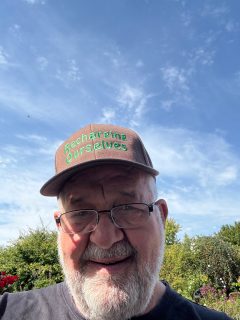
Be The Change You Want To See


Do you want to make a difference in the world? Do you want to see some real change in the way the world is, and how your community functions?

“Be the change you want to see in the world.” (Mahatma Gandhi)

“Volunteers are the only human beings on the face of the earth who reflect the nation’s compassion, unselfish caring, patience and just plain loving each other.” (Erma Bombeck)

Do you want to live in a better neighborhood, a better community? Do you think the world could be a better place? Are you tired of hearing about the troubles of the world and all the negative political rhetoric? Are you frustrated that things are getting worse, and there’s nothing you can do that would make a difference?

Then, get involved and volunteer. Connect with a person, help them out, and make a difference. Take a few minutes, an hour, maybe a day, and offer your talent. Pay attention to someone, work together on a project, or simply have a conversation and offer a kind ear, a helping hand.

Find a group where you can get involved. Or do something on your own.

It can start with just a simple conversation at the grocery store or with a neighbor, a few kind words, and maybe a helping hand.
Volunteers are at the center of our community life.

Our schools, churches, community festivals and gatherings, museums and parks are staffed by volunteers. Much of what happens around here would quickly fade away without dedicated volunteers.

On a more personal level, our volunteers are helping an elderly neighbor with their yard work, or bringing them a meal. Others tutor a child, or help out at school or church. The possibilities are endless.

Our community calendar in the local paper is filled with activities run by volunteers, working to make this community a better place to live.

I see the impact of volunteerism everywhere. Without them, our welcome mat wouldn’t be as inviting, and as enjoyable for our visitors. Our youth and our seniors wouldn’t be as integrated into our social fabric. Our community wouldn’t be nearly as vibrant and supportive.

Look around you. Volunteers make a difference, and they change lives.

I volunteer. I find a project, I connect with a person, and pay attention to them, and put action into my caring for their wellbeing. I make a difference and my heart is filled with a sense of purpose, a sense of accomplishment. My volunteer work at the local youth prison and with master gardeners gives me a sense of purpose, and helps change people’s lives for the better.

In volunteering, I become an instrument of change. I am part of the solution to a small part of the world’s problems, rather than a person who just sits back and complains. I have a purpose, and become a voice for doing good.

The payback for me is amazing. What I give I receive back tenfold. I feel better about myself, I contribute, I connect, and I become a better member of my community.

Volunteerism is all about health, my health, the community’s, my state, my nation, and the world.

I can even stand to watch the evening news, and know that I don’t need to just listen to the litany of the world’s problems and get caught up in all that drama. I’m not the passive listener, who can easily say the world is a miserable, hopeless place. Instead, I am part of the answer, an agent of positive change.

—Neal Lemery, July 26, 2016