Neal Recently Featured on OPB’s Think Out Loud


http://www.amazon.com/Mentoring-Boys-Men-Climbing-Mountains/dp/1502514028

Neal Lemery and Carol Imani join Geoff Norcross of OPB’s Think Out Loud.

Often lost in the news stories of crimes and criminals are the stories of the families of the people who find themselves in the criminal justice system. On Oct 18, a group of Oregonians gathered at the First United Church to read their narratives about how they, as family members of people who are currently incarcerated, navigate the experience from the outside.

On Oct 15, Geoff Norcross of OPB’s Think Out Loud interviewed English teacher, Carol Imani, and me. The podcast is embedded below. More about the story can be found here.

Happy listening. Neal’s section begins at the 5:50 marker.

Speaking about Mentoring…


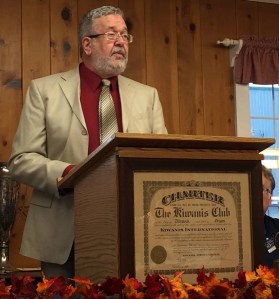
Tillamook Kiwanis Banquet Speech

Neal Lemery

September 30, 2015

Thank you. It is a pleasure to be with you on this special evening, as you honor your organization, and your service to our community. This is a sweet and special celebration of good works.

Kiwanians have always been known for your service and your dedication to improving the lives of others. You make a difference.

You bring about change, and you are people who change other people’s lives.

The famous anthropologist, Margaret Mead, said, “Never believe that a few caring people can’t change the world. For indeed, that’s all who ever have.”

I believe that each one of us is a powerful instrument of change. When I worked as a judge, I saw that people were hungry to change their lives, but many people simply didn’t know where to begin. Life was too overwhelming, and they had been told throughout their life that they were failures, and weren’t good enough to achieve success and realize their dreams.

And, most people don’t have anyone to believe in them, who believe that a person can take those few hesitant steps forward in the right direction, and start changing their life.

You and I don’t accept that model of how the world works. We believe in making a difference, and bringing about change, one person at a time.
IMG_1108

I’m a strong believer in teaching by example, and the power of mentoring.

Every one of us needs a strong person in our corner, someone who is our champion, our cheerleader — someone who believes in us, and where we are going.

When I was growing up, and, indeed, throughout my life, I had the benefit of strong, compassionate people — people who believed in me, and believed that I could achieve great things, and realize my dreams. My mentors weren’t Superman, and they didn’t have magical powers. But, they believed in me, and took the time to encourage me, to support me, and to give a nudge now and then, during the times when the going got tough, and the road ahead was rocky.

It is astonishing to me that there is such great power in a few kind words, and some time spent over a cup of coffee, offering the hand of friendship and a little push in the right direction.

I had the benefit of good parents, and growing up in times when there were strong families and vibrant, caring neighborhoods and communities. I grew up with a sense of optimism and hope, in a time when our nation’s leadership challenged us to travel to the Moon, and to “think not what our country can do for you, but what you can do for the country.”

Leaders challenged us to dream, and to declare war on poverty, racism, and ignorance.

Today, our country faces great challenges, and, once again, we are rising to the challenge of making a difference, and improving lives.

Our tasks are not easy.

I work with young men in prison who are fatherless. Most of my kids haven’t had a visit from family in over a year, and most of the time, its four or five years. In their world, anger and disappointment, and living without hope has been the norm.

The national statistics are shocking:

85% of youths in prison come from fatherless homes.

90% of homeless and runaway kids come from fatherless homes.

85% of the kids who have behavioral problems come from fatherless homes.

71% of high school dropouts come from fatherless homes.

And, 63% of kids committing suicide come from fatherless homes.

Not having a strong, healthy father figure in a young person’s life has a huge impact on their life. That’s not rocket science, by any means, but society in general doesn’t seem to get too worked up about that. But I know I can change those statistics.

I’m all about change. You’re all about change. How does each of us make that happen?

I believe it starts one person at a time. And, that means one cup of coffee at a time, one chat with a kid in your neighborhood, one handshake, a few kind words to someone who is struggling. Its taking on the work of a father or a mother with a kid who needs a healthy adult in their life, someone who takes an interest in them, someone who cares.

It truly takes a village to raise a child.

I go to prison every week, and visit some kids. I spend time in their garden, helping them with their plants, teaching them something they didn’t know about gardening. And, there are so many other lessons to learn there, not only for those young men, but for me.

I meet with young men one on one, too. I drink coffee and talk with some kids about their school work, and how they are changing their lives. I try to be a consistent, positive role model, someone who cares about their lives and where they are going.

I don’t do this work by showing up as Mr. Expert, or putting on the black robe of a judge and lecturing them about the law and responsibility. Instead, I show up as just me. I meet them on their own terms, and become their friend. I listen, I support them, I cheer them on. And, most importantly, I believe in them.

We are fortunate to have the Youth Authority in our community. It is a place of healing, and a place of great change. The teachers there set high standards, and, every week, I see young men getting their lives in order, and making the changes they need to make. It is a place of hope and a place of courage.

Most of the guys out there tell me that being in that prison is the best thing that’s ever happened to them. It’s a place where someone cares about them, and where they are safe, and can make the changes they need to make.

You do this work, too. You are out in the community, meeting kids and other folks on their own terms. You’re out there volunteering, doing service work. And, people see that. They see your example, and they know that you care. You are people of action, people who are changing the world, one person at a time.

You listen, you encourage, you help them light their candles, so that they can find their way in life. And, they find their way because they know you are there, that you care about them, and that you are willing to spend the time with them that they need.

You are the builders of this community and you are the builders of the men and women of the next generation. I commend you for that, and I congratulate you on doing the hardest job there is to do. You care about someone, and motivate them to feel that they are worthwhile human beings.

In that, you change the world.

Thank you for all that you do.
First Smush


Smoke swirled
Flames hot across fresh wood
We sat, ash floating
Between us.

Marshmallow on a wooden stick,
Passed around, until we all had one,
Until all the sticks were over the coals
Except

His —- he whispering to me,
I don’t know how to do this—
No one else noticed, when I took two
Graham crackers, two squares of
Chocolate, and waited
Until our marshmallows caught fire, until
I helped him blow his out and heat blackened white

Again, until I asked him to slide white lava
On the chocolate, scooping it off the
Stick with the other cracker
Half, and asked him to smush it—-
Like this —- just
Smush it down.

Smush, he
Whispered to
Himself.

Now what? looking at me,
Lost still, around the circle, around his first
Fire, until I, nodding, smushed, then
Stuffed mine into my mouth.

Good? I asked, seeing his mouth
Full, he — finally nodding —
Smushed wonderment in his eyes, new melted
Goo
Dripping out of his sweet mouth.

—-Neal Lemery 7/11/2015

Fathering Time


Fathering occurs unexpectedly, often in the richest, most productive ways.
Undefined, unlimited by the clock and the calendar, those moments of rich, intense interaction suddenly come into our lives, without us often being aware until it comes upon us. In the moment, space opens up between us, and the energy, the love, flows.
Wisdom comes out of our heart and, often unspoken, shared. Emotions pass between us, and the gifts of the moment are exchanged.

The refrigerator calendar announces that Fathers’ Day is coming, but the fathering moments don’t pay attention to that, nor do these heart to heart conversations need to have a Hallmark card or a boxed up tie to get the juices flowing, to say what is deep inside of us, as we reach out to someone we love, and just be a dad.

This work we do, being the dad, a small moment of reaching out, giving a compliment, a hug, sharing a few words of wisdom, comes at unexpected moments. The phone rings, there is a welcoming silence in the car, or time to put your arm around someone and give a squeeze, and then, the moment is gone.

Life gets busy, and the daily to do list is calling. But, I try to find those moments to do my real work, the important work, of just being there, listening and speaking with my heart, just being a dad.

—Neal Lemery 6/16/2015

“we are pleased to offer you…”


Acceptance
Came in a moment—
Months, years of work,
Then waiting, life on hold.

Others now seeing
What fills his heart,
Hot coals from his passion fire,
Scorching their sense of
Who he is becoming,
All his possibilities.

Perseverance, determination
Pushing him onward
To who he will be,
Marbled sculpture in progress,
Tender heart beating strong.

Now, he dances with joy,
Knowing, at last, he is worthy,
Dreams now reality, validated,
Passion fire burning brightly,
Touching, reigniting
Other hearts.

Today, others
See him for who he really is, to
Know his heart—
Dreams
Turn to joy.

–Neal Lemery April, 2015

Looking for the Real Men


–—Neal Lemery

It is football season, but instead of team rankings and excited discussions about last night’s game, we are talking about domestic violence and criminal charges filed against macho guys who are supposed to be the big stars, the tough heroes of the very essence of he-man professional sports in this country.

There are public expressions of outrage and deep discussions are happening. Advertisers and sponsors are flexing their own muscles, not wanting to be seen as paying athletes who are violent, even criminal. How should we respond when the strong, he-men heroes of the gridiron are caught on tape beating their lovers unconscious with their fists, or leaving bloody wounds after beating their four year old sons with sticks and whips in the name of “family discipline”?

What does it mean to be a man in our society? Who should we look to for role models on how to be a healthy American man? For once, the answer to that doesn’t seem to come from the gridiron on a Sunday afternoon. It’s not about scoring the winning touchdown anymore, but how are you supposed to behave with your wife, how are you supposed to raise your child and guide them lovingly through childhood, teaching them about a father’s love?

But isn’t a man supposed to be strong, to be the winner, not showing any weakness, any sensitivity? Isn’t that the message we hear when we watch the “big game”? Aren’t those guys the heroes we seem to want to have to look up to?

“I have to remain strong,” a friend told me this week, as we talked about manhood and love, how we are supposed to act in this society.

Yet, strong isn’t necessarily tough. Strong isn’t what we need now in this country as the mantra of a good, healthy American man. At least, that kind of “strong” that we’ve been seeing in that videotape of the famous, and highly overpaid football player, punching his girlfriend into unconsciousness. And, it’s not the “strong” kind of abuse that another pro football player is trying to somehow explain to us, after he’s been indicted for assaulting his four year old son with a stick, bloodying the child as a way of expressing “discipline” and “love”.

“That’s how I was raised,” he says, as if that somehow makes violence and the teaching of fear acceptable parenting.

After all, it was a “good whupping”, about teaching his son to “behave”.

No, the “strong” man has other ways of expressing love, of raising a child, or supporting his girlfriend in their relationship, of truly being a partner, and not an abuser, a real domestic terrorist.

Isn’t the real domestic terrorism in this country the plague of domestic violence? Isn’t domestic violence and the terror it produces the real public health crisis in this country, the real warfare that is tearing apart families, and instilling fear and chaos?

Isn’t it time we said enough is enough, that we redefine what it means to be a real man in this country? To be a real hero?

It’s OK to cry, to cry about love and grief, and family. It’s OK to show love and emotion, to be open about how we feel, about how we care about the people we love, people that we hold close to ourselves, people who are family.

Maybe, just maybe, if good, big hearted men cried in public, and cried in front of their loved ones, we’d be better men; we’d have a gentler, safer world to live in.

In showing that compassion, that willingness to be honest and open about how we really are, how we really feel, we are truly being men, men who are healthy, men of integrity, men of moral character. Isn’t that part of being a good parent, being open and honest about how we feel, about how we care, about how we love? Don’t we want to teach our kids those values?

Yes, we can be good role models to our family, to our community. Maybe professional football players can be sensitive, caring, understanding men, men who model good child rearing, good partnering, good husband-ship. With all their money and prestige, and powerful influence on millions of people in this country who look up to their strength and athletic abilities as symbols of leadership and character, maybe these athletes can respond to the calling of being healthy, good men, true men who are the essence of healthy masculinity.

9/18/2014

Turning 21 and Going Out for a Beer


Turning 21 is a big deal. It is the traditional “coming of age” birthday, the day you really become an adult, and everyone knows it.

It’s the day you can go out for a beer with your buddies, and walk into a bar, legal for the first time.

It’s a rite of passage, one we all look forward to, one we all celebrate.

Back in the day, it was truly the day you became an adult. You got to vote, you could own property, you had all the legal rights of adulthood. Now, we’ve pushed all the legalities back to 18, or even earlier.

Still, turning 21 is still a big deal, a moving into adulthood, no questions asked.
When you’re in prison, the day is just another day. No going out to the neighborhood bar for a beer, no big party. No bartender checking your ID and giving you a thumbs up, as you order your first legal drink.

My young friend called me the other night, on his 21st birthday. It was about his bedtime, and the prison dorm was settling down. He didn’t have a party, and no one made a fuss over his big day. I’d sent him a card, the only one he got. Some of his friends were having a get together, but they couldn’t invite him. He doesn’t live in their “unit”, and he couldn’t be a part of their party of some snacks and a movie.

I couldn’t take him out for a beer, either, but that’s what he needs. He’s been in prison for five years, and has four more long years to go. I’m one of the few on his visitor’s list, one of the few normal ones who show up. Sometimes, his family comes, but that’s a tough day for my friend. Too much insanity, too much manipulation, too much of the old dysfunction. Like a lot of guys there tell me, he thinks prison is the best place he’s ever lived.

It’s a long, long time, his prison time, especially for something that happened when he was supposed to be in middle school, but his parents hadn’t bothered to make sure he went., The relationship he had with a girl was encouraged by all of the parents. Family dysfunction was the theme of his youth, and they kept him away from school and friends. What we like to think of as a normal life, and normal values was foreign to him, until he got to prison. It’s a too familiar story, dysfunction junction.

Not that he’s wasting his time now, though. He’s finished high school, earned an associates degree, and just now is starting on his second degree. He’s taking advantage of all of the on line education the system is offering him, and has a respectable 3.9 GPA.

He’s teaching a lot of the other young men in prison, as well. He’s a leader, and a tutor, and makes sure they are working hard and moving ahead. He’s the junior counselor, the mentor, the older brother a lot of the guys need.

We get together every couple of weeks, to talk about books we’ve read. We’re our own writing group, exchanging essays and poems we’ve written, offering each other some valuable critiques. He reads serious books, and I’ve been sending him some of the classics in philosophy, science, and history. He absorbs all of them, and is eager to have a discussion with me about what he thinks, and what the authors were trying to say.

If we were college roommates, he’d be the guy who lived at the library, and went on to grad school, just because it was fun to study, read books, and challenge the professors with his take on the tough subjects.

He’d still be the guy I’d like to go out and have a beer with, on Friday afternoon, after the last class of the week. He is serious about his guitar, and writes some thoughtful songs, lyrics with several layers of meanings, and chord progressions that please the ear. He laughs and jokes about life, and the dramas and politics in his life.

Yet, when he called that night, the night of his birthday, he was all alone. He reached out to me, making small talk about our writing, good books we’re reading, a bit of music. It was almost everything we wanted, in that phone call, talking as good friends, kindred spirits. All that was missing was the beer.

An Education Gives You Great Possibilities


by Neal Lemery

September is a time of new beginnings. Vacations are over, and we are back at our daily routines, our work, and, for many of us, our education. Kids wait for the school bus, excited, and eager for a new year of adventure. They feel the possibilities in the air.

Community college is part of that excitement, that feeling that dreams are possible, that each of us can keep growing and learning, becoming better equipped to live our lives, and make a difference in the world.

“Understand that the right to choose your own path is a sacred privilege. Use it. Dwell in possibility.” — Oprah Winfrey

We’ve all seen lives change when young people go on to college, and adults return to the classroom, to gain new skills, and, more importantly, a new perspective on what we can achieve when we learn new ideas and gain new skills.

I recently took a young man to college, helping him to walk through the door, enroll in classes, and chart his path to a promising career. His big smile told me that continuing his education and challenging himself to grow and apply his skills in college was the right move for him.

Because of the generosity and thoughtfulness of charitable people in the community, he received scholarships to help with his student loans. His dream became a reality, and he is now on his path to achieve his possibilities. He felt valued, knowing that his education and his future were something that generous people think is worthwhile.

Already, he is coming up with new ideas and fresh approaches to the challenges of his profession. He will continue to build a strong community, and to give back what he has been given, a chance for a new life.

When we help fund a scholarship, no matter what the amount we give, we give a helping hand to young people like my friend, giving then a chance to improve themselves, a chance to fully realize their dream. We make a better community. Indeed, as Oprah Winfrey says, this is sacred work, being able to help a person transform their life.

I see the fruits of such generosity everywhere in our county, people working hard, raising families, and making a difference, all because they had the chance to go to college, and improve their lives. When we make that dream possible, when we give of our time, our encouragement, and money for a scholarship, each of us changes the world, one person at a time.

September is an exciting time, and a chance to make a difference in a person’s life, offering all of us a lifetime of rewards, and possibilities.

For more information about the TBCC Foundation and planned giving, contact Jon Carnahan or Heidi Luquette at TBCC, (503)842-8222 x 1010. http://tbcc.or.us and click on “foundation”.

Neal Lemery is president of the TBCC Foundation, and a returning TBCC student.

(published in the Tillamook, Oregon Headlight Herald September 3, 2014

Root Beer and Potato Chips


I see him every couple of weeks, our time spent playing a game and talking about his accomplishments. Tonight, he’s got on his best shirt and a pair of khakis.

“I dressed up for you,” he says, as we shake hands and sit down at the table.

He takes the games seriously, being focused, attentive, a big smile showing up when he wins, or when he makes a good play. He smiles when I win, too, just enjoying the company, and having a good time.

“I played with my dad, too,” he says. “We had a good time.”

I nod and talk a bit about having fun playing games when I was a kid. I make light of it, not wanting to linger. A few visits back, he talked about how his dad abandoned his mom and the kids when he was ten, and then died of a drug overdose.

Life went downhill for him, and he found himself in long term foster care, then an adoption. The family rejected him, and he was adopted again, and then that family rejected him, too. He ended up in some program for lost and abandoned teens, and then, he ended up here, in prison.

I make sure I show up when I say I will, and I’ll play any game with him he wants to play. I buy him a coffee drink from the prison canteen, and sometimes a cookie or a hamburger. I try to be one of the few who stick around for him, who show up, and are willing to spend time with him.

I’ve known him well enough now that we can talk about most anything. He’s growing a goatee now, and its starting to fill in, and look like a real beard. It’s growing in with two colors, patches of brown and then patches of tan, almost white. His hair grows that way, too.

I say something nice about his addition to his face, trying to send a compliment his way, to notice his new manliness.

“Interesting that there’s two different colors,” I said, suddenly realizing I might be coming off as rude or obnoxious, tripping over my tongue.

“Yeah, just like my hair,” he says.

“I was a failure to thrive baby,” he adds. “I was in the hospital for my first three months, and then my mom got special formula for me.”

“But, she sold that for drugs, and fed me root beer and potato chips for six months, before the case worker finally caught on.”

“That’s why my hair grows in patches; two different colors. Malnutrition.”

No big deal.

He goes back to the game, intent on studying the cards in his hand.

He lays down some cards, making a brilliant play in the game, racking up a bunch of points. He laughs, telling me he’s going to beat me on this hand.

Root beer and potato chips. I’m still back on that, still trying to wrap my head around a mom who would sell her baby’s formula for drug money.

And, it’s no big deal. Just a fact in his life, just part of the craziness he’s gone through, just his story. Another matter of fact anecdote to tell over a game of cards.

He’s finished up with high school, and he’s ready to graduate. He was going to go through the graduation ceremony, the one the high school has here every June, but he got sick and had to go to the hospital for three days, and missed the ceremony.

We’re planning a special ceremony for him, a day just for him to get his high school diploma, and get a round of applause. He thinks his mom is coming, in a couple of weeks, and his brother, too. He wants them here for his graduation, wants them to see him get his diploma.

She’s only been back in his life now for the last six months. They talk on the phone, and she’s come to see him a couple of times. He says it’s a good thing, and they are starting to have a real relationship.

“But, when she comes to visit, I don’t get any root beer or potato chips,” he said, breaking into a chuckle, and giving me a wink.

“We’re just moving ahead.”
8/30/14

The Spiritual Samaritan


“A spiritual Samaritan lives knowing that if we were to leave this world tomorrow, we were the best humans we could be and we touched the lives of as many souls as possible. We are not asked to be perfect. We are asked to make a difference.” —Molly Friedenfeld

“You mean I’m not perfect?”

Not by a long shot. But, then, maybe I’m too hard on myself, too self critical. I make mistakes. I don’t get it right the first time, or even the second or third.

After all these years, I’m still trying to accept my humanness, my continuing ability to not get things perfect the first time, or ever. I keep learning, I keep trying. I plug away, sometimes one step at a time.

My stubbornness gets in the way, too. Being wrong isn’t always the answer I accept willingly, so I don’t always learn very well, and stay on the wrong path. Perhaps smarter people would have figured it out long before I do, and change their approach, trying a different method, one that has a much better chance of success.

Or, I procrastinate, simply not taking on the task and doing the work.

“Later,” I tell myself. “I have other things to do now.”

But, later comes around and the task still sits there, at the top of my to do list, waiting for me to get around to it. I know waiting won’t make the task easier, but I still do my dance, avoiding what needs to be done.

Maybe it will go away. But, it usually doesn’t. What’s left undone still hangs over me, uncompleted, calling me to get it done. Just do it.

But, I often don’t.

Again, I realize I’m not perfect. The cycle repeats, and, once again, I beat myself up, thinking that I am a failure. I’m not perfect. But, I am pretty good about beating myself up, reinforcing my human trait of not getting it right, making more mistakes.

So how do I know when I’m moving forward in life, when I am actually getting something done? I look around me, seeing if things have changed, if I am making a difference.

And, in the end, that is the real question. Am I making a difference? Am I changing someone’s life?

When it comes to people, seeing if I’m making a difference isn’t always tangible. Helping others out, helping them move on in their lives, giving them the encouragement to see their own talents, and to go out and live their own dreams, isn’t easily measured.

Yet, there’s progress. People are moving ahead, taking charge of their lives, and finding the courage to live their dreams, and not be caught up in the past, not judging themselves, again and again for what they did a lifetime ago.

People change, and people find the courage inside of themselves to move ahead, embrace new values, and to live their dreams.

I hear many stories, many tales of success. Conquered fears, dreams realized, real change. People find their courage, and they are moving ahead.

I’m making a difference with myself, as well. I need to take stock of who I am, and who I am becoming. My task is to realize what I’m capable of, seeing that I have ambition to get something accomplished. Yes, I have my own fears and doubts, but I know I can face them, and use those challenges in order to move myself ahead, and make a difference, a difference with me.

I am a spiritual Samaritan, helping myself and helping others move ahead with life, accomplishing tasks, honing skills, and improving lives. To do that, each of us must believe in ourselves, our capacity to love and realize our dreams, and to help others along the way.

—Neal Lemery 8/26/2014