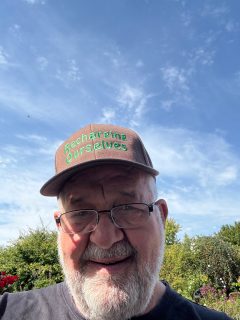
Heather Strang, featured guest blogger


A guest blog from Portland author Heather Strang, author of five books on spirituality and life. She’s a fresh, exciting storyteller, sharing her amazing and inspiring personal journey.

“I want to tell you a story. A story about me. Growing up I knew I wanted to be a writer. I told my mom. She told me that was a terrible idea. I told my teachers, they said I probably wouldn’t make any money doing something like that and should keep it a hobby. At 17, I knew that I loved radio and wanted to be in radio broadcasting. But my religion as a Jehovah’s Witness didn’t “allow” college and again everyone around me agreed it was a terrible idea.

I spent my 20’s trying to live my life like I had been conditioned and programmed to. And I was miserable.

At 28, a health “crisis” woke my ass up and for the past almost 10 years I’ve been on a Spirit-led journey of reclaiming who I really am and living the life that my Soul came here to live.

And because of this, I’m living a truly extraordinary life filled with Magic and richness and connection and joy – far more than I ever knew was available to any one human. And I know I’m only just getting started.

Here’s what I’ve learned: Haters gonna hate (thank you T-Swift). My “job” and your “job” if you so choose is to follow the path that Lights you up the most even when it doesn’t make “sense” and even when everyone around you says it “can’t” be done. Because we came here to show our part of the world that it CAN be done.

Today, after dancing with radio as an interviewee and as the former wife of a radio show host (hello shadow! ;)) I launched my first Internet Radio show.

Today, I ordered the final proof for my 5th book. 5th! Even though one of my high school teachers Mr. Dean and my mom and grandma all told me not to “waste my time”. If only they could see me now.

I write every day. I am in service every day to something greater than me. I live a life that Lights me up.

Thank you for being a witness to this and being in this swirl. If anyone at 12 or at 17 or at 28 would have told me I would be living this life, right here, right now, I would not have believed them. What.A.Ride. Love to you all! Xox

P.S. Here’s a preview of my 5th book, an Oracle called A Life of Magic. I’m so excited to share it with you soon! Xo

-Heather Strang
www.HeatherStrang.com

Heather Strang
http://www.HeatherStrang.com

Your energetic and psychic health needs daily care! Get my free energetic toolkit to allow your physical, mental, emotional and spiritual health to be at an even more aligned level. Enjoy!

And…have you read any of my 4 books yet? Check them out and get inspired today!

“The Quest takes you on a journey deep within, asking you to honor your own guidance above all else and reminds us that when we follow Spirit and work with the laws of the Universe miracles abound. A must-read for any Spirit Junkie on the path!” —Gabrielle Bernstein, New York Times bestselling author of Miracles Now

Love Tour


by Karen Keltz, author of Sally Jo Survives Sixth Grade, and an award winning poet. Read more about her at Karen Keltz’s website and blog

THE LOVE TOUR

January is a most depressing month, and February follows right on its heels. Here on the coast everything is dripping wet, soggy and marshlike. The prominent color of the sky is some variation of Payne’s gray, from “dark ominous” to “continual dusk” to “shiny steel.”

Lest you think growing things are all dead, though, when you see brown, slime, and mold, I’m here to tell you plenty is going on underneath the leaves, twigs, branches and mulch.

The same is true if you are also a writer. You sit at your desk, uninspired, staring at the rain pouring past your window, pummeling your roof. You rail at the Muse for playing hide and seek. Your story refuses to go forward. And yet, things are also happening there, down in your subconscious, which will begin to make connections.

Even if it’s spitting rain, I suggest you take a hopeful walk around your garden. What you see will rev up your creative brain. Make what I call the Love Tour.

Today, I asked myself, “What can I see that I love?” I started out from the front door, where our porch is decorated with primroses my husband bought at the store, with the joy of their color in mind. We love seeing them every time we go in or out of our home. We didn’t grow them, but I think they count anyway.

–I thought about how others choose to do good deeds with our happiness in mind or how we choose to do the same. The why of that decision-making and subsequent action makes an excellent essay topic Why do the characters in your story do what they do?

Next, I noticed all the nubbins—bulbs arising in either sidewalk bed. Some early daffodils are ready to bloom, but the later bulbs are slowly undressing. Besides daffodils, I saw the arms of narcissus, crocus, snowbells, hyacinth, muscari, tulips and Scilla siberica, all reaching for the light.

–We humans know what is worth reaching for, what really matters in our lives, if we are in touch with our souls. What does your character truly desire or does that change from beginning to end of your story?

Around the corner, two clumps of heather are in bloom. I love the happy pinks. If I clip some stems, they fit perfectly in a teeny blue glass vase and will dry and retain their color for a couple of months on a counter or table.

Some yarrow is greening, promising its work as a bouquet filler and a medicinal in herbal concoctions. The rose campion and foxglove rosettes haven’t frozen and neither has the hollyhock, which means we may have their colorful blooms earlier than usual. I love that!

The rosemary is green and blooming. I squeeze and rub the leaves and smell my hand. Heavenly!

Green ferns are out of the ground. So is the German chamomile. More green.

–There are moments for all of us where right and beautiful things are present to fill our hearts and make us glad to be alive. Often they stand out starkly in the ugliest of times. What are those moments for your characters?

The red-twigged dogwood pops color where there are no blooms. I saw buds on the lilacs, forsythia, flowering quince, and pussy willow. I love seeing their promise!

–What gives your characters hope during their bleakest hours?

Without leaves blocking the view, I noticed the structural elements I put in place last summer, such as the graveled patio space I dug and laid for the red table and chairs, and the paving stone foundation for the red bench. I love that it’s all ready when the time comes. I also made a list of the places that need work and the pruning that needs done as soon as the weather is more forgiving, because right now they are more noticeable.

–Same with writing. You’ve made your storyboard or outline, the structure that keeps a reader turning the page. When you’ve finished filling it with specific details, then you begin anew to prune what doesn’t work and enhance what does.

After my circuit of our house through the flower beds, looking for things I love, I reached my front porch in a much happier frame of mind, grateful for nature and my connection to it.

Something special for my eyes translates by comparison into new story ideas or character motivations, or whatever I need to make my work move forward. I’ve given my brain a treat, and if I’ve paid attention and asked myself the right questions, my brain will reciprocate.

We can’t always get away to sunnier climes, but we can always take ten minutes out of our day to make the Love Tour. I recommend it.

Being Civil


I wear a number of hats in my community, and I’m involved in a number of issues for which I have a great deal of interest and passion. My resume could be rather lengthy, but then, most people I know around town also take on a variety of tasks and roles, and have a treasure chest full of talents and experience. And, I’m certainly not the only one who can get stirred up about a subject.

My most important job title is “Citizen”. And we need to respect each other, and honor our fellow citizens for their vital role in our social fabric.

We don’t always agree, but we do keep talking with each other. We have lively, often passionate discussions and conversations about “hot topics” and how we can marshall our collective resources and move forward.

I suppose that’s politics, but it is politics in the good sense. We put our passions and our viewpoints out on the table, so we can have rich discussions, and so we can come together and find solutions, and implement them.

Sometimes, our conversations are heated and involved, but that is because we care. We care about each other, we care about our community, and we care to take the time and energy to make our community a stronger, more effective place to live our lives and invest in our future together.

I’ve learned to respect other people’s viewpoints. They have had different experiences, different backgrounds, different thoughts and opinions. Those differences are resources, assets for all of us to treasure and respect. We need all the tools we can find to take on our community’s problems and to move ahead.

In those conversations, those disagreements, we have the opportunity to explore the full extent of our problems and our solutions. Disagreements are really resources, and differing viewpoints give us the opportunity to examine our own views and our own solutions. By listening to others, respecting their views, and by working towards a consensus, or at least a collective decision based on compromise and fully explored views, we make better decisions.

Our diversity is one of our strengths and one of our best tools to build a better community and a better country.

I want people to not stir the political cauldrons, yelling about our differences, or crank up the volume of heated arguments. Nor do I want to applaud the cleverness of someone’s political rhetoric, or the depth of sarcasm and vitriolic speech.

Let’s tone it down, and be civil with each other.

“Civility means a great deal more than just being nice to one another. It is complex and encompasses learning how to connect successfully and live well with others, developing thoughtfulness, and fostering effective self-expression and communication. Civility includes courtesy, politeness, mutual respect, fairness, good manners, as well as a matter of good health.”

– Pier Massimo Forni, Professor, Johns Hopkins University, who chairs their Civility Project (http://krieger.jhu.edu)

Wise words from the National Institute for Civil Discourse, at the University of Arizona, Tucson. (http://projectcivildiscourse.org) :

“Lately, there’s been a lot of talk about the need for community leaders and elected officials to tone down the divisive and polarizing dialogue that seems to typify discussion about difficult community and political issues. But what is it that average, ordinary people can do to help heal our community and restore our sense of cohesiveness and solidarity in order to take on our common ground issues and concerns? We’d like to suggest the following as a starting point for measuring our individual impact on restoring Arizona’s “Civil Culture.” Feel free to add to this list!

1. 1. Be an active part of the community you live in!

o Do you know your neighbors? If not, go meet them! Make food to share and use it as an occasion to go door to door to meet new neighbors or your closest neighbors that you may not have met.

o If you are eligible, register to vote, inform yourself about local issues and vote in local, state and national elections. Attend public meetings and read up on the issues to make informed decisions.

o Get to know who your elected officials are and how to contact them to inform them of your views.

2. Volunteer / Serve others

o There are innumerable community organizations looking for regular or occasional volunteers.

Investigate ways to involve your whole family in regular volunteer activities that speak to an interest or concern that you all share.

o Make yourself available (within reason) to assist friends and neighbors in need.

3. . Make sure future grown¬ups are part of the solution

o If you’re a parent, talk to your children about respecting others with differences of opinion, and lead by example. Involve them in discussing ways to deal with conflict and disagreement in constructive, bridge -building ways.

o If you don’t have children, get involved with mentoring programs to provide support to young people who may not have good adult role models in their lives.

4. 4. Don’t take yourself so seriously

o When someone disagrees with you, don’t take it personally. Refuse to allow the disagreement to escalate into an exchange of personal attacks. Ask questions to really try to understand where the other person is coming from, and show them that while you may not agree with them, you are interested in understanding their point of view.

o If you’re having a bad day, consciously make an effort not to take it out on others.

5. . Broaden your horizons
Learn about, or get involved with, people that are not like you. Seek out cultural activities or performances that you’ve not experienced before; read about or take a class on another culture, religion, political ideology, interest, etc.”

Developed March 08, 2011 by Maricopa Community Colleges Center for Civic Participation for Project Civil Discourse * projectcivildiscourse.org

— Neal Lemery 2/1/2016

Pruning Time


The days are growing a little longer, and I contemplate the coming of spring, with its promise of new growth, new beginnings, and, with work, an abundant harvest.

A few days ago, the sun was out and it was time to prune my little apple orchard. With newly sharpened and oiled pruners, I ventured out, soon shedding my sweatshirt and enjoying the physical work and the satisfaction of making the foundation for this year’s apple harvest.

I pruned out the dead branches, the branches that crossed each other and rubbed in the wind, and the few limbs that were diseased. Then I topped the scraggly branches that won’t produce fruit. I didn’t hold back, pruning and cutting with vigor, as I shaped the orchard into tidiness, preparing the trees for a healthy summer of apple production.

Where there was chaos, I brought order, and cleaned things up, making for a bountiful year in this corner of our land.
A nice pile of trimmings grew, bound for my friend, the fisherman, who welcomes my annual gift of apple wood for his smoker. One man’s discards are another man’s treasure.

As I went about my work, I felt my shoulders twinge from this new work of muscles and joints, gone soft from an idle winter in the house watching the cold rain fall. The sun felt warm on my pale skin, and I contemplated the smile of my friend as he thought of all the salmon he could smoke with my gift.

There will be many gifts from all the pruning: healthier apple trees, more apple pie filling, apple butter, and cider for next winter, a springtime of trees loaded with pink blossoms, and a summer of vigorous, healthy trees growing a new crop of fruit.

My friend will do his own magic with the prunings, and create mouth-watering smoked fish, putting smiles on more faces.

There were other lessons in the pruning; how cutting back, taking out our dead and dying wood, and opening our branches to the bright sunshine will bring bigger, juicier fruit to our lives.

Old thoughts, and old ways of doing things need to be looked at, with newly sharpened pruners in my hand. If I want a vigorous tree to grow, or a bountiful harvest, I need to think of the pruning that would move my life in the right direction.

The young men in my life are pruning their orchards now, with newly sharpened tools and a fresh determination to transform their lives. They are looking at their past, and their dreams, and finding the directions they want to go. Dead wood and dis-ease are being cut away, and their trees are being reshaped and thinned. Only the vigorous branches remain, with the promise of abundant and fertile blossoms to emerge in the springtime of their youth.

Old ways of thinking are being evaluated. New paths and fresh thinking are being explored, and they are moving ahead; their minds always challenging and testing. Boys are turning into healthy, thoughtful young men; the best type of crop to raise.

They are learning about their emotions, finding names for feelings and thoughts, figuring out how to live with themselves and with others as healthy young men, with clear, focused minds.
I prune my apples every year. I expect my young friends to find their pruners and tree saws, too, and also tend to their orchards. My task is to show them the way, teaching them to be good orchardists for their own lives.

It is a lifelong challenge, this living with one’s emotions and feelings. Like good farmers, they tend their fields and pay attention to their crops, and weathering the storms that roll in, bringing new challenges and opportunities.

They say they learn from me, but I also learn from them. Their courage and determination reinvigorates me, in my journey through this life. They make me a better farmer, a better caretaker of my own orchard. Because of them, my harvest is more abundant and sweeter.

–Neal Lemery 1/29/2016

Sharpening Our Tools


There’s always a lesson for me in the garden, especially when I’m the teacher.

The young men gathered around the table, looking at me, leery about the day’s agenda. The pile of our trusty and well-used pruning shears, weeding forks, and trowels, and my odd assortment of files, oil cans, rags and steel wool was raising some puzzled looks.

“We’re going to sharpen our tools,” I said. “And that will make us better gardeners.”

I talked about dirt and grit, and how dull, rusty tools slow us down, and make our work harder. I talked about rain and damp, and getting rid of rust with a bit of oil wiped on a newly cleaned surface.

“If you take care of your tools, they will last a lifetime,” I said. “It’s a great gift to yourself.”

I talked about how pruners work, whether anvil or bypass, and why the blades are different. I picked up a file, showing them how to hone a blade, bringing out the edge. Doing a good job was all in how you finished it, by gently taking off the burrs on the edge, bringing out the best of the blade, and ourselves.

The metaphors were not lost on these young men, struggling to remake their lives, and move on to managing their lives in a decent, productive way.

I showed them how to do the work, and then urged them to pick a tool, and do their magic.

“The right tool for the right job,” I said, echoing my grandfather’s wisdom I’d heard when I was a young man.

Curious, eager minds asked dozens of questions, and, again, I showed them how to hone the blades, taking their eager hands into mine, helping them grip the file and set to work.

They found their way, getting a sense of that feel, of file meeting blade, steel against steel, until the newly bright edges met their standards of completion and excellence. Rust and dirt were buffed away, and a new coat of oil made hinges and springs smooth and silent. Grime and dirt were banished, the young hands feeling how they brought back the life and beauty of the tools they’d used this past year.

One young man kept doing it differently, missing what I was trying to teach. I was gentle with him, explaining everything again and again. I felt my patient grandfather in me, as I took his hand and the file, and began the lesson again.

Uncertain frowns gave way to smiles and shared accomplishments, the pleasure of making something as good as new. I saw young men restoring something to its original good purpose, gaining pride in who they were, and knowing what they could do.

We sharpened all of our tools today, and we sharpened some lives, too. I sensed my grandfather’s arm around me, holding me tight, whispering how proud he was of how I sharpened my tools.

–Neal Lemery 1/23/2016

Getting Our Brain In Shape


Getting Our Brain in Shape a 3-part series
January 12, 2016

By Neal Lemery

There’s a lot to learn about our brains, and recently, I heard Dr. Neil Nedley engage several hundred of my friends and neighbors in rich conversations about the human brain.

We can improve our brain’s health, and get it in shape. It’s time for a brain fitness challenge which is as important as working our muscles and getting our bodies in shape.

Yes, we can change our brains, our behavior, and our attitudes, and we can change the functioning of our brains.

We can move through depression, anxiety, fear, and other unhealthy “stinking thinking” by improving our nutrition, exercise, social life, and our attitudes! By learning of new developments in brain research, we can improve our thinking and our lives.

Here are some of the things I learned. All this is a great start to a rich community wide education and conversation about mental health and our well being.

PART ONE

Oregon has the second highest suicide rate in the country. Tillamook County has the third highest rate in Oregon. Mental health is an issue we need to address as a community.

The brain has 100 billion nerve cells. There are 100 trillion nerve synapses, and there may be the possibility of ten times that amount. Each one of these cells has 20,000 possible connections. There are thousands of categories of cells.

As complex as the brain is, we now know the brain can repair itself and, with the right tools, even re-wire itself. Our research on the brain is just beginning.

There is a lot we can do to optimize our brains. Consider the acronym NEW START. We need:

• Nutrition – especially from vegetables. Nutrients in food provide the building blocks of our nerve cells and what makes them function
• Exercise. At least 20 minutes a day, ideally using our hands, moving in three dimensions, to stimulate the brain
• Water, more than you might think but yes, you can get too much
• Sunlight, natural or from a light box
• Temperance – Avoid harm. Live in moderation. Practice self-control. Understand the long-term benefits that come from delayed gratification
• Air. Fresh air is vital. Get outside and move.
• Rest. Early to bed, early to rise.
• Trust. Have a trusting relationship with others, with Spirit.

PART TWO – What’s the Frontal Lobe Got to do with It?

Depression and Anxiety

We are experiencing an epidemic. What we have developed to improve happiness actually often impairs brain function. Electronic screens with flickering light reduce frontal lobe activity and induce a hypnotic state in the brain. Increased sexual stimulation actually reduces pleasure and interest. Poor nutrition, lack of exercise and lack of exposure to light and fresh air also reduce the ability of the brain to respond and function.

26% of Americans have a major emotional disorder. Over 50% have a minor emotional disorder. This phenomenon is found across all social, economic, and education groups. One quarter of physicians are depressed.

We must look for long-term gain. Once brain health is optimized, a family is able to leave poverty, reduce violence, addiction, unemployment, and hunger.

The frontal lobe is the least studied aspect of the brain and yet makes up 33% of the human brain. If it is compromised, it affects moral principles, social interaction, judgement and foresight. The frontal lobe takes 30 years to fully develop and is home to such things as abstract reasoning, mathematical understanding, and empathy. When enhanced, the frontal lobe increases a person’s creativity, originality, curiosity and adaptability.

The frontal lobe is the seat of critical thinking. Current research shows that 45% of college students lack critical thinking skills. Lifestyle and behavior choices play a large role in the development of the frontal lobe. Drugs that can impair this development include illicit and prescription drugs, alcohol, nicotine, caffeine and marijuana. Alcohol can impair brain function for as long as 30 days after consumption. Repeated use of marijuana lowers IQ permanently, also lowering emotional intelligence (EQ) and motivation.

Intelligence is the capacity to learn, retain, and apply knowledge. Advancing in a job is NOT related to IQ but rather to Emotional Intelligence (EQ). Creativity, logic, and persuasion are tied to EQ. Improved EQ increases longevity, enhances the immune system and improves social relationships. Emotional Intelligence can be taught and increased over one’s lifetime.

PART THREE – “Know Thyself”

Enhancing Emotional Intelligence (EQ) occurs in five stages. The first of these involves self-awareness and understanding your own primary and secondary emotions. Why are you feeling that emotion? What thoughts and experiences are tied to that emotion? Feelings can lie. How we think, influences our reactions to problems and situations. Use the THINK technique to identify if these thoughts are helpful or harmful. Are they True, Helpful, Inspiring, Necessary or Kind? This is at the root of “Stinking Thinking.” The second stage of Emotional Intelligence involves the ability to manage our emotions and the thoughts that lead to them.

The third aspect of enhanced Emotional Intelligence is the ability to accurately recognize emotions in others. This is coupled with the ability to practice empathy, or the ability to understand and feel the emotions of another person even though you are not experiencing their situation firsthand.

The final two aspects of Emotional Intelligence have a lot to do with social relationships and “getting ahead” in life. How well we manage relationships with others and how effectively we can motivate others are features of a well-developed EQ.

There are many ways we sabotage the development of our EQ. Negative self-talk yields to adverse emotions. Magnifying minor issues or minimizing major issues are signs of impaired EQ as are defensiveness and denial. The alternative to this is an attitude open to repair and redemption. “A man who commits a mistake commits another mistake if he doesn’t correct it.” – Confucius

Practicing self-control, expressing gratitude, finding hope, seeking “bright lines” of morality, seeking worthy goals, and giving of self willingly are part of living the “psychological good life” and are the foundation for personal transformation.

We can turn setbacks into victories. Find the lesson, apply it, and
Move on. Then look back on defeat and smile.
–David Schwartz

Beginnings and Endings


“I wanted a perfect ending. Now I’ve learned, the hard way, that some poems don’t rhyme, and some stories don’t have a clear beginning, middle, and end. Life is about not knowing, having to change, taking the moment and making the best of it, without knowing what’s going to happen next.

“Delicious Ambiguity.”

― Gilda Radner

What I do today won’t be perfect, and the result won’t be all neat and tidy.

The new year is upon us, and while I have high aspirations for what I want to accomplish, I won’t achieve perfection. The ideal will escape me.

Life. It is the journey, and not the destination.

Onward!

Neal Lemery 1/4/2016

Change


What you’re supposed to do when you don’t like a thing is change it. If you can’t change it, change the way you think about it. Don’t complain.”
― Maya Angelou, Wouldn’t Take Nothing for My Journey Now

Today, the first day of the new year, is here. Change is here. Change is inevitable.

I take down the old calendar, and put up the new one. Its pages are fresh, clean, but soon to be filled up with appointments, events, the significant occurrences and adventures of the new year.

A fresh year, a new start, and off we go. Already, I am deciding what to do, how to interact with the world, how to be a productive and healthy person.

How do I meet the challenges of the new year? Old habits, old ways of thinking, or maybe a new approach, a new paradigm for the new year.

Every day, actually, is like New Year’s Day. We have that ability to make a fresh start, and embrace new ways of thinking, every day.

I embrace the old ways, the routines. They are comforting, predictable, familiar. Yet, following those old ways, being in my rut, assures me of not growing, and not realizing my potential in this new year, this new day.

A new year is a new beginning, if I want it to be truly a fresh start.

“Be the change you want to see in the world,” Mahatma Gandhi said.

I do want the world to change. But first, I need to change. It is up to me to begin.

Today.

Neal Lemery 1/1/2016

A Few Hands of Rummy


The week before Christmas is always hectic. So much to get ready for, so many little errands, the to do list that doesn’t seem to stop. And, part of me struggles with the short days and the long dark and cold nights. There’s a big part of me that just wants to eat comfort food, ingest lots of sugar, and snuggle under a blanket with a mug of tea.

I recently stopped by the nearby youth prison for my weekly visit with a guy. No one has come to see him in the last four years, so I’ve been asked to come and say hi, be his friend, so he can gain some people skills. Soon, he’ll be out in the world, and will need to be able to interact with the world. Spending some time with me is a start in all that.

Once a week, we play cards. He’s teaching me rummy. I’m not sure of the rules, andI think we have our own version of the game going on. He’s the teacher, a new role for him, and he’s starting to enjoy teaching this old man a few things.

The conversation is a little one sided. He’s not used to company and making small talk. He’s struggling with math at school, so keeping score in the game of rummy is good for him. He’s making something in wood shop. He’s keeping it mysterious, so I think its my Christmas present.

I’m getting him a blanket for Christmas, one that features his favorite football team. He mentioned he’d like that a few weeks ago. But, now he’s claiming he can’t remember what he asked me for Christmas. I wouldn’t tell him today. It’s a surprise, a part of the excitement of the season.

Except for what he’s getting from the prison, and a local fraternal organization, no one else is getting him a present.
He said he liked the Christmas card I sent him this week. He mentioned it several times, but not finding the words he wanted to say.

He showed me the card he was making for his grandma. It was sweet, with a little Christmas tree and the ornaments, Charlie Brown style, made from a sheet of copy paper, colored with crayons, and hand blocked letters. He’s sixteen now, but the card had the look of something from an art class a long time ago. Yet, it was something from his sweet heart. I’m hoping I get one, too. It would go on the frig, and I’d show it off to my friends and family.

“My gin rummy buddy gave that to me,” I’d say. “He’s quite a guy.”

We play a few hands, and discover we have an extra Queen of Clubs. He doesn’t know what to do, so we change the rules and play 53 card, five queen rummy. It really is our own game now. We’re just making it up as we go along.

The hour flies by. We’re busy shuffling, dealing, laying down some runs, and adding up our points. He’s beating me, big time. We don’t talk about much. But, we don’t need to. We’re just hanging out, two guys having a good time, playing some cards.

“Are you having a good time?” I ask.

“Oh, this is great,” he says. “Yeah.”

“I’m really glad you come to see me,” he says. “Otherwise, I’d be all alone.”

The other guys here are busy, and the room where we play can get pretty noisy. But, my buddy is zeroed in on our card game, intent on adding up his points, and beating me.

“I’ll see you at the Christmas party next week,” he says. “And, don’t forget my gift.”

I’ll get one from him, too. But, he’s already given me the best present, the simple gift of an hour, a little conversation, and some hands of cards, and his face breaking out into a little smile.

And, maybe that’s the best gift I could ever have for Christmas.

12/23/2015
–Neal Lemery

A Little Soup and Cornbread


My community has had a hard week. Nearly a foot of rain, 70 mph winds, and many roads, schools, and businesses closed, people flooded out. Farms have been flooded and lives have been disrupted. And, the storms have kept on coming, with each new day bringing new challenges.

We are resilient folks, in the habit of doing kind things for our neighbors, helping out, offering support, food, a place to stay, and thousands of other small acts of charity and kindness.

Yesterday, I was enjoying lunch in a local café with my wife, taking a break from our errands on a day when the roads were opening up, and the shelves in the stores were getting restocked. The mail had gotten through the high water and landslides on the highway.

We were talking about being grateful to wake up in a warm house, with electricity, running water, and no water coming through the door, and how we like living in a place where people care about each other.

A man rushed into the café, with a container of homemade soup and some cornbread in a plastic bag.

“This is for the man that lives in the woods. He comes by here most every day,” he said. “I want to make sure he gets this.”

“When you see him, give him this,” he said. “Please”.

He was on his way out of town, now that the roads were opening up, but he didn’t want to forget about the homeless man who lived out in the woods, in this very wet and windy week.

“I’ve been worried about him,” he said.

The waitress nodded, and mentioned she hadn’t seen him lately. Before she could try to tell him that she probably couldn’t accept the task, health laws and such, he flew out the door, thanking her again for helping out a homeless guy.

She filled up my coffee cup again, a few tears in her eyes.

“That man in the woods, he comes by here once in a while,” she said. “But I haven’t seen him this week. I’ve been worried, too.”

“Hopefully, he’s made it to the warming center in town,” she said. “But, the water’s been high and covered the highway. Such nasty weather.”

I sipped my warm coffee, and finished my burger, with new thoughts of appreciation for the simple comforts in life, and watched the rain hit the window, as another heavy shower moved in.

I don’t know the man, and I haven’t seen him around. But I think about him now, and what it must be like, living out there in the woods, in a week when the rivers are over their banks, and the winds howl through the trees.

We know those woods, and go there for walks, looking for birds and old trees, spring flowers and berries later on in summer. I hadn’t thought that people lived there, though, especially not now, when the ground is soaking wet, or even flooded, and the winter storms blow through. I shivered, squirming inside my nice dry shoes, trying to imagine what last night might have been like, sleeping out there, in the dark and the rain.

In a few weeks, it will be Christmas, when we’ll hear that story again, about a homeless couple and how they found refuge in a barn, and a place to give birth to their beautiful child. How a stranger had let them use his barn, and gave them food.

The waitress put the soup and cornbread in the cooler. The café fell silent then, everyone watching her, everyone thinking about what we’d just seen, thinking about being homeless and hungry on a day like today, the meaning of Christmas, and angels in our midst.

—Neal Lemery 12/12/2015