Graduation Inspiration


                                    Graduation Inspiration

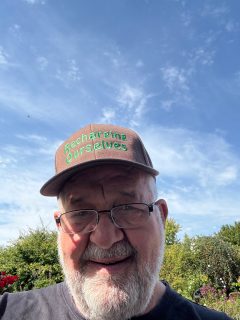
                                    By Neal Lemery

(Published in the Tillamook County Pioneer, 5/26/2025)

            I made a serious run on the graduation card rack at the store this morning.  Four great nephews and nieces are graduating in the next few weeks. I needed to fulfill my duties as a great uncle, to acknowledge their achievements, give them a round of applause, and note their collective plans to go on to college.  

            Inspiring cards were selected, along with some gift cards. Giving money for college expenses is part of the family tradition, too.  Inspiring, heartfelt messages need to be composed, to go along with the cards and money.  The older generations need to speak out, and proclaim their praise and kudos to yet another generation of college-bound kids. 

            Each of them has already started on their college career, with dual credit classes as high school seniors, visits to college campuses, and early applications for admission.  This uncle sees them as bright, ambitious, and starting to live their dreams of being responsible, resourceful adults.

            These accomplishments continue a community and a family tradition, of getting out in the world and finding a useful, satisfying career, and to give back. 

            This is a time to remember and celebrate the ancestors, too, with visits to cemeteries, and taking some time to ponder their lives this Memorial Day weekend. The ancestors were big advocates for education, traveling the Oregon Trail and later paths of emigration to the Northwest, eager to homestead farms, build schools and raise families who had brighter opportunities.  They, too believed in getting an education.  

Settlers to Oregon established numerous colleges and academies. Schoolhouses were one of the first community buildings erected in new settlements. Property taxes were assessed to fund schools. When Oregon was surveyed, and homestead sites were platted, one section (a square mile) of every township (36 square miles) was designated as a community asset for local schools.  Today, Oregon has numerous private universities and a flourishing state university and community college system. 

Funding and administrating our public school system remains a vigorous topic of our politics, and schools remain a core value of our culture. 

            A century ago, my grandmother had a dream: a college education for each child. She did some research, and then moved her family from a Canadian prairie wheat farm to the Willamette Valley, where there were a number of colleges.  Two of my aunts and all three sons earned graduate degrees. Not a bad accomplishment in the 1920s and 1930s. 

            When I was six and she was 84, she gave me the same heartfelt, forceful message, insistent that I work hard to better myself and live a productive life.             

Now, I am in the oldest generation, and can look ahead two generations to see family members who have worked hard and be set in their ways to advance themselves. Our family has been around here for nearly 180 years, and the path to self-improvement and building community is a well-worn, and expected, road. When I talk with young people about their future, I hear my grandparents and parents’ voices, urging “get an education”. 

            At the funeral of a family matriarch who was a strong advocate for education in my wife’s family, the minister asked the crowd who among them had pursued an education because of her urgings and counsel. Over one hundred people raised their hands. Her encouragement continues to motivate and inspire young people today. She left a powerful and long-lasting legacy. 

            This graduation season, my family’s graduates are also getting a book, The Man Who Planted Trees, by Jean Giono. It’s an allegory, a story of a shepherd and war veteran who transforms a community devastated by war, into a new forest, a place of hope and possibility.  More than tree planting, the work lifts people up, spreading optimism and self-confidence.  It is a lesson in restitution, giving back by helping nature recover, of bringing new life to a devastated community.  The tree planter does his work without seeking fame or fortune, and quietly does his work behind the scenes, anonymous.  

            We can all be tree planters, making a difference from a simple act every day. If you look around, there are a lot of people among us who make a difference, quietly, and persistently, acting with love, kindness, and hope. 

            I see that same drive and passion for self-improvement in today’s immigrants, reminding me that the flames for self-advancement and hard work continue to fiercely blaze, changing lives and our community. That energy and drive is a welcome strength and vital asset. 

The voices of our community advocates for education continue to be heard and listened to. And for that, I am grateful. 

5/26/2025

A Few Lessons in Compassion and Caretaking


                                    By Neal Lemery

            (Published in the Tillamook County Pioneer, 4/3/2025)

            This week, life gave me some perspectives of my role in community building and healing.  It was time for me to be in school, and to get reacquainted with taking a positive, proactive role, to quit my bellyaching and whining, and take some positive action. 

            A friend invited me to coffee, seeking some guidance and direction on their new role parenting a young relative.  They thought I had some wisdom on the subject, but I suspect they were more in search of affirmation and encouragement, with me as a cheerleader and proverbial optimist.  I can certainly play the role of cheerleader, and have the scars to prove I’ve played the role of a parent of teenagers.  

            Yet, I celebrate my role as parent, having just had a rich conversation with one of my sons this week. That unexpected phone call was filled with rich stories, laughter, and his comment that he had called “just to hear your voice”. Our talk about relationships, marriage, and our mutual desire to keep learning affirmed my thoughts that I’d done a decent job with him.  

            At coffee with my friend, I listened, commiserated, encouraged, and offered a few suggestions.  My friend thought I was a genius, as they acted on my ideas and found success and affirmation. My theory is that they instinctively knew the answers and the ideas had ripened and were well received.  They had done the hard work, and just needed to see they were headed in the right direction.  It’s not too hard to give a gentle nudge when people are already doing the right thing.

            It was a reflective week, as well.  A friend had given a talk about their passion in cleaning cemetery headstones, and helping families find their heritage, while sharing some nearly forgotten local history.  In that work, they celebrate the lives of those who have gone before us, and giving us all a sense of foundation and heritage.  

            I took that message to motivate me to visit my own family graves, and do some much needed maintenance and rehabilitation.  As I stood there in the cemetery, gently brushing off old leaves and debris and applying a cleanser to wash off decades of gunk, I took a good look at the names, and the dates of birth and death.  I ruminated over all the good times and hard times represented by the dashes between those dates, and the impact those ancestors had on me. 

            It was a time of contemplation, gratitude, and respect.  I hadn’t taken the time lately to acknowledge their contributions to my life and the importance of the ancestors’ various roles in their raising of me.  Like most of us, I get caught up in the daily busyness and worries, and ignore who I’ve become and why.  A lot of that comes from those family members whose headstones I was cleaning. A few tears came, and also a flood of good memories and gratitude.  

            These days are abundant in harsh words and comments, with people taking the opportunity to be snide, hostile, and even indifferent to another person’s crisis.  The daily news cycle overflows with crisis and uncertainty. I’m trying to limit my exposure to social media and its recent abundance of nastiness, and political discussions having a dominant theme of adversity and opposition. I want all that clamor to instead be a vehicle for addressing challenging community needs.  

            I left the cemetery, and that coffee shop after seeing my friend, with a new sense of gratitude and peace, knowing that in life, we do a lot of good things, and help a lot of people on their own walks in life.  The daily news cycle may seem important to people now, but knowing that I’ve been both the giver and the recipient of good thoughts, support, and kindness is worthy of my celebration and thanks.  That’s where I need to put my focus and my love.

4/2/2025

From Catastrophe to Opportunity


                        By Neal Lemery                                                                                    

(published in the Tillamook County Pioneer, 3/11/2025)

            Often, a disaster turns into a positive asset, and life improves, comes into focus, and good things emerge from the gray somber atmosphere of disaster.

            Such change comes unexpectedly. 

            The Chinese character for catastrophe is the same character for opportunity.  

There was a time in college that I had lost direction, adrift despite the abundance of good opportunities and challenges from my professors and fellow students.  I was adapting well, mastering my subjects and, at least outwardly, achieving great strides in my abilities and my knowledge of my favorite subjects. 

            Yet, I was adrift, often wondering what I was doing there, and what direction I needed to take. There were a lot of possibilities, but I didn’t have a good sense of what was right for me.  Everyone around me seemed content, hard at work, and feeling directed and motivated.  Maybe I needed to take a term off, get a job, and get my act together, stop spinning my wheels.  

            During one Christmas break, one of my aunts suddenly died.  We were all in shock, as she had been healthy, vigorous in her retirement, and embracing her passion for botany and nature conservation.  Her heart attack on a hiking trail doing what she loved left all of us feeling lost, shook up.

            She lived far away from me, but would visit several times a year, telling stories of her adventures and always bringing a special book for me.  When I was little, she’d read to me, animating the story with her voice, her laughter, and her passion for kids.  We’d have great conversations, she being a vocal advocate for education, reading, and bettering the community.  “Being of service” was the theme of a lot of our conversations and letters.  

            Her sudden passing brought my “lost in college” questions to the forefront.  I recalled her wise counsel, her urgings to me to make a difference, and do something in life.  Reminiscing about her life and her messages to me brought my dilemma into sharp focus, giving me impetus to regroup, to rethink my intentions of why I was in college, and what I was doing with my life.

            Mourning her death, and celebrating her life woke me up. I applied that grief into fuel to regroup, to have a serious talk with myself, and strive to make a difference in my life.  There were some hard lessons on not realizing the value of a person in your life until they are gone. Having my aunt in my life made a big difference in my own life, and I resolved to continue her presence, her message in my life, and our relationship.  

            Her funeral was on the day I went back to college, to start winter term. The eulogies, and the story telling among family recharged me, and I began the new year and the new term with a revitalized focus, looking for possibilities and opportunities.  I felt her spirit and vowed to remember her with my own zeal for making a difference. 

            Recently, a good friend passed away, and again I am shaken by this loss, this departing of a mentor, whose wisdom and talent were bright lights in my life.  We’d met for lunch a year ago, telling stories, laughing, and, true to her form, mentoring me and calling me out to refocus and regroup.  She’d plant seeds with me, giving me story ideas and action items, sometimes acting with such subtlety that I didn’t realize that her seeds were even in my garden. She was a master of “guerrilla gardening”. 

She was a writer, capturing the joys and treasures in ordinary life, always aiming at celebrating the community she loved and cared for.  She wrote about simple things, events and happenings, but always with an ear for the deeper message, the profound experiences of friendships and listening to our souls.  

            She was blunt, open, honest, and passionately cared about people.  Her stories of daily life were much more than a casual observation.  They were deep and profound, and the reader was often gently lured into her observations, not always expecting the strong message she had set out to convey.  She got her point across, with love and humor, but also with a depth and intensity you didn’t notice until you came to the end of her writing.  

            There were many gifts in her writings and in our conversations. She was a literary craftsman, with a big heart.  Kindness was her mantra. 

            My friend and my aunt would have been dear friends, soul mates, and I imagine they would find much to laugh about and comment on.  My sorrow for missing my aunt is rekindled by my friend’s passing.  I’m reminded that out of catastrophe comes opportunity.  

In my grief, there is renewal, there is new hunger for opportunity, for change, growth, betterment. My aunt and my friend are still there for me, still offering their gifts, and their love, still teaching me, still changing the world. 

3/11/2025

Tillamook County Board of Commissioners Statement on Racism. 2/26/2025


FOR IMMEDIATE RELEASE                                        Contact: Mary Faith Bell

                                                                                    Phone: 503-842-3403

                                                                                    Email: maryfaith.bell@tillamookcounty.gov

SAY NO TO RACISM 

(TILLAMOOK, OR. February, 2025) I had lunch with a friend and her daughter on President’s Day. My friend is a U.S. citizen and a Mexican American. She told me about a recent racist incident she experienced in Tillamook where she and her husband and their daughter were leaving a local business, and a group of teenagers in the parking lot yelled “F*****g Mexicans!”

Just imagine for a minute what it felt like for that dad, a husband and father, to be bullied by teenagers in public and not be able to defend himself and his family. Imagine what it felt like for the mom to role model making herself small before racist bullies, to show her daughter that these white teenagers have all the power. 

My friend told me that she urged her husband, to ‘Just ignore them,’ knowing that she was asking him to go against his instincts and let ignorant teenagers badmouth his wife and child in public in their own hometown. 

It is not only teenagers who are acting out racist attitudes. Last week in our own building a local Hispanic couple were subject to racist comments about “illegals”. Reportedly the gist of the comments was the false belief that illegal residents receive more public services than do legal residents.  

Incidences of overt racism are on the rise because people feel empowered to be inappropriate and hateful by what they’re hearing on the news and online. The person in the courthouse might very well have heard on talk radio or a news channel that undocumented immigrants get more assistance than Americans. That is false information, but it is being spread. 

Likewise, the teens who yelled at my friend and her family may have been listening to political hate rhetoric on the news saying that illegal immigrants are ruining America. That is also false information. 

In this time of constant misinformation, we must remind ourselves and each other what is true. Tillamook County Hispanic families are good neighbors. They work hard, pay taxes, support local businesses, coach youth sports and belong to local churches. They are our coworkers, employers and employees. As a workforce they are essential to our economy; local businesses of all kinds including farming, construction, logging, the seafood industry, food manufacturing, hospitality, restaurants and social services could not  function without them. They go to school, go to college, volunteer, give of their time, talents and resources to help the community.  

Our Hispanic neighbors deserve our civility and respect, and their children deserve our love. 

All of us are in a position now to decide what we will or will not tolerate in our families, in our workplaces, in our community, and in our own hearts and minds. Please join the Tillamook County Commissioners in saying no to racism, no to hate, and standing up for our Hispanic neighbors. 

### 

Komorebi


 (published in the Tillamook County Pioneer, 2/17/2025)

(Komorebi: The interplay of light and leaves as the sun shines through the trees.)

Into this place, this space
Open to light, streaming, flowing
Straight light, angled, shaded, scattered in part 

By and through
Leaves of trees, trunks, and limbs Dancing onto the ground, my face
In all the colors in this place.
Quiet here, except birdsong and breeze, All that is not human,
And leaves, rustling, murmuring Gathering and scattering the light.
I take it all in, absorbing
Marveling,
Me only a small insignificance,
A mere witness
To magnificence,
Awe.
No word in my language to describe it
I rely on the Japanese
Komorebi
—Neal Lemery 3/28/2023 

When I am in need of quiet and contemplation, space to sort things out and re- gain my perspective on life, or simply work through a difficult and challenging prob- lem, I take myself to the forest. I seek out the quiet, off the “beaten path” places, and look to immerse myself into that experience, into what I call the purity of nature. 

Unpolluted by human activity, the real forest experience seems uncomplicated, where time takes on a different existence, where process is not measured by modern culture, but by the incremental pace of natural life. 

“Slow down” is the message I soon experience, until I start thinking that my hu- man concept of time is actually toxic, harmful to other life forms. And after I move into the “slow down” mode, I start listening. I listen and begin to hear the silence, and then the subtle sounds of forest life and being. A breeze in the trees, a bird song, the al- most inaudible sound of a small twig falling or the faint sounds of moving water. The chaos and sound clutter of modern life ebbs away, and I am left to again discover the calm of natural sounds, and the rhythm of the real world. 

In the quiet, I hear myself breathe, hear my footsteps, hear the noises of the for- est, its inhabitants, the breeze, leaves, animals, the now familiar sounds of this world. And, I wonder why I don’t go there more often, to just be, to sit with the natural quiet, to feel the rhythms of the real world. I can hear myself think and I become reacquaint- ed with my thoughts, my true “self”. 

What I had thought important and worrisome a half hour ago, is now just noise that is fading away into the background, to be set aside so that I can again hear the sounds of the forest, and feel at peace. Human problems and worries diminish in this visit to nature, and what is really important in life re-emerges, comes out of its hiding places, and takes center stage in my brain. 

All is good. All is well. All is calm. 

I take some breaths, feeling myself breathe, feeling a deep sense of relaxation, of ease, of the flowing away of tensions and stress. I am in a good place, a place of peace. Tranquility. And in all that, I am comforted, put at ease. 

The simplicity of all this, the minimalist being of all this, astonishes me. No money changed hands, it was little effort to come here, and to quiet myself, and begin to no- tice things, and to not notice the things that had been pressuring, irritating me. I could simple be a being that noticed, that observed, that was present. A being focusing on existing, on experiencing the quiet and the spirit of the forest. I was in simplicity, and it was good. 

Part of my brain, freed at least for a while from the tyranny of being in “work mode” and being the analyzer and problem solver, worked in the background, and I found myself picking up my brain’s solutions and answers to what had been troubling challenges. I wasn’t very conscious of that thinking, but the answers and paths to solu- tion came forward. It was easy and I just found myself accepting that I was getting some answers, that troubling problems had solutions, and I wasn’t struggling to find them. I was calm, in touch with myself, with the world, and in my focus on where I was at, what I was experiencing in the forest, somehow opened the door to my human world tasks. 

I breathed again, deep, and unfocused. I was simply “being”, not doing. 

Again, I realized I needed to be a being and not a doing. The creatures and spirits in the forest were all beings, and not doings. I could be like them. I could learn from them, how to live, how to be, how to be immersed in my existence. How I could just be alive.

And that was enough. No great expectations, no objectives. Just be alive and feel. 

The forest did not sit in judgment of me, or evaluate, assess, critique. I could just be. Myself. I could just be myself, without expectation. 

Whatever purpose, whatever mission I had come to the forest for this day, was ac- complished. I sensed a new feeling of satisfaction, of accomplishment. Maybe not tan- gible, maybe nothing I could check off a box about, but I had come for what I needed. And it was good. It was enough. 

I breathed again, and gave thanks to the forest where I sat, and was filled with gratitude, and with a sense of completeness, of accomplishment. Not in the human, “civilized” sense, but deeper than that, a sense of wellbeing in my soul. 

Making Things Better


                                    By Neal Lemery

(published in the Tillamook County Pioneer, 2/5/2025)

            I’ve always heard that we are here to make things better.  That is our ultimate purpose, and that we do that work with love, compassion, and focus.  Whatever else we are doing in our life, at the end of the day, life should be better for others, for our community, and, sometimes, for ourselves. 

            We are here to serve others.  Our own comfort, our own advancement, our own betterment is not as important as being of help to others.  When I was growing up, that was a strong lesson in religion, in being in community, and in our own personal work in learning how to be productive in our lives. At the dinner table, I was always asked, “Did you make a difference today?”

            That work was expected to be a primary focus in our family lives, our careers, and in becoming productive adults.  We were expected to help others along the way, and help them on that road to serving the community, and in growing and advancing all of us as we moved into adulthood. I also frequently asked myself that question. That personal inquiry continues today.  

            Seth’s Blog, written by author and social commentator Seth Godin, took a deep dive into this subject a number of years ago, digging into the ideas of “better” and “making”:

“1. Better implies that what we have right now is imperfect. Better requires change, and change is scary. Better might be in the eye of the beholder. Better is an assertion, one that requires not just the confidence to say it, but the optimism to believe that it’s possible.

“2.  Make implies that it’s up to us. Someone needs to make it better, and it might just be you. In fact, if you don’t enlist to produce better, you’re part of the status quo, which is a problem.

“I’ve seen that there are pockets of our culture where both of these ideas are difficult to embrace. That authority pushes us to fit in, not to seek improvement, and deniability encourages us to whine instead of doing something about it. Power enjoys passivity in others.

“Power doesn’t want you to get uppity, doesn’t enjoy your dissatisfaction, doesn’t want to be on the hook to continually upgrade all of its systems. And so power has sold a cultural norm of acceptance, deniability and ennui.”

            I get complacent in life, finding myself stuck in my routine, accepting the status quo, going along with what most other people seem to think, and what they want in life.  There’s that “oh, well” thinking, that I’ll just accept what’s happening and forget that I can be a strong and vocal instrument of change, that I can make a difference and change things up.  Just me. Just one person.  I don’t have to accept what I think “everyone else” is thinking.  

            There’s no shortage of opportunities now.  Local volunteer opportunities and job possibilities offer much in doing things that truly make a difference in the lives of our neighbors and our community.  That work also strengthens each of us, improving our skills, and connecting us deeper with our own abilities and talents, as well as responding to the needs of others.  Just look around; the possibilities, as it is often said, are endless. 

            Life gives us the opportunity to be independent thinkers, to have our own ideas, to do our own research, our own analysis.  And, to speak out.  If we listen, we hear that call to be brave and forthright, to have our own opinions, and, at times, to disagree with others. And, to do the work that needs to be done. And, as John Lewis said, to “do good trouble”. 

            That kind of thinking can be radical, disquieting. But I can step out of the norm, out of complacency, and to be one of those folks who stirs the pot, who thinks differently, who takes action when it seems others fear to tread.  

            I don’t have to look too far for that kind of inspiration and guidance.  Most of my ancestors took chances, braved new worlds, and embraced changing their lives and their circumstances.  They were all immigrants, or the descendants of immigrants, who crossed oceans, traveled to new and challenging places, and reformed their lives.  They embraced the idea of bettering their lives.  And, in doing so, to take on some hardships and challenges, striving to realize the benefits of hard work and personal sacrifice. 

As Seth writes, “I’ll reiterate my belief that we each have a chance to assert. To announce our vision, to propose a change, to do the hard work to make things better.

“It’s on us, right now.  Make things better by making better things.”

—Seth’s Blog 4/17/19

2/4/2025

Leading With Integrity


                                                By Neal Lemery

                                                (published in the Tillamook County Pioneer, 1//9/2025)

This community’s latest lesson in morality and integrity has come from members of the Tillamook High School girls varsity basketball team, who expressed their views and outrage on their athletic experience and coaching. On their own, they spoke out and gave word to their concerns, giving us a lesson in sportsmanship, athletic integrity and personal courage. Such lessons often come from our youth, who have been observant students in our community’s lessons on doing the right thing.  

They are being courageous, and living their values.  They are stepping out of their comfort zone and taking a stand. I’d argue they are doing what they should be doing in that work, being congruent with how they should be living their life, how they should be acting as citizens, as the next generation of moral leaders, of living an ethical and purposeful life.

Some may disagree about the facts, or how to respond.  But, the issues have been raised, and we are all challenged to respond, and to weigh our own moral and ethical actions. By raising these concerns and asking these questions, these young athletes have shown their courage and their integrity. They are leaders and I thank them for taking these concerns head on. I’m proud of those kids.

            This is a good time to be asking those questions of morality and justice. Those are the questions we as a community need to be asking, need to be discussing.  Are we doing the right thing? Are we teaching others to lead, to be honest, open, to be people of character and integrity? Do we truly grasp the essential purpose of having an athletic program?

            They have given us much to ponder, and deserve our thanks for putting this issue on the community table. Such questioning is truly one of the fruits of the spirit and purpose of athletics.

            How do we teach these invaluable values? How do we parent, coach, lead and thereby pass on our sense of integrity, morality, and sense of seeking justice and mutual respect.  These students have raised those questions, and have caused us to think. How do we respond?

            Listening to Jimmy Carter’s grandson eulogizing him at the National Cathedral this week, I was reminded of the importance of being present, of parenting, teaching and doing all that with honesty and integrity.  

            Jimmy Carter did that around the dinner table, at the fishing hole, and in the woodshop as he gave leadership and imparted his values to his grandson.  The grandson listened, learned, and internalized that.  This week, he put that education to use, sharing it to the nation, and spoke his truth to our political leaders and a country seeking to deal with memories and legacy of a president, and a man who lived his faith and values in the world.  

Jimmy Carter made a difference and, in this time of political and social turmoil and instability, I’m wondering what we’ve been missing, what do we need to learn again.  I’m looking for that moral compass, and social standards. I’m looking for leadership.

Looking back on how I’ve helped raise my sons, I keep wondering and evaluating what I did right, and what I did wrong, what I missed out on.  I’m realizing that the real magic, the real work happened not when I was in my lecturing mode, wearing my disciplinarian hat, my “tough father” attitude.  What really worked was teaching by example, the telling of my day around the dinner table, how I dealt with some ethical dilemmas and conflicts, how I lived my life, where the rubber meets the road.  In those times, the real learning, the real imparting of parental wisdom and guidance occurred.  That’s when I was really doing the work of preparing young men for a healthy and fulfilling manhood. I was growing, too, and shared my own growing pains with my sons. 

It was perhaps the best moments while we were in the car, where we weren’t “dealing with issues”, but just being friends on an adventure.  It was the time when one of their friends also sat at the table, and we were having a casual conversation, or when I was helping them with some homework, or offering them a safe place to spend the night, or sharing a funny story.  

            Kids today are under a lot of pressure.  Social media and the speed of technology has robbed all of us of those quiet, uncluttered moments together, when we aren’t compelled to be busy, to deal with multiple tasks, or cope with the pressure of bullying, peer pressure, the need to conform and “fit in”.  When I was a kid, some of the best times were simply lying on the grass, looking up at the sky, watching the clouds, and just being in the moment.  I don’t see kids doing that much now.  They’re busy responding to a lot of stimulation, and trying to fulfill the expectations of others to conform, to fit in, to excel at something.  

            But, I also see kids taking back those quiet moments, to standing up for their own values and ethics, to staking out a position on important issues, and structuring their lives so they can build their own morality, and occupy the higher ground of moral integrity.  The girls basketball team is a prime example. Recent news stories on the national and the local level are often the stories of personal integrity and taking moral stands.

            I’ll argue that most of us want to live like Jimmy Carter’s grandson did, having a grandfather who talked and lived a moral life, a life of integrity and purpose.  I could often disagree with some of President Carter’s political decisions, but I couldn’t discount that he acted with what he thought was a sense of morality and faith, that his decisions were based on what he thought was right, right for himself, and right for the country.  

            I suspect his grandson disagreed with him sometimes, too, and that they had heartfelt and deep conversations about what was right, what made sense for everyone involved.  I had those conversation with my sons, too.  We’d often disagree, with my sons often quick to point out the flaws in my arguments, with my actions.  It was a healthy debate, and I could see my sons sharpen their wits, solidify and sometimes, change their viewpoints.  The frosting on the cake was when I saw them have similar discussions with their friends. I would see my sons leading the educational moment, and instilling in their friends a stronger sense of morality and justice, and a sense of respect. 

            What are we teaching our kids today, and what should we be teaching them?  What do we show them by example, what are the values that we are showing them as they grow into adulthood?  In doing that, are we making our world a better place, are we training good leaders?  

Are we teaching our kids to be like Jimmy Carter’s grandson, who can stand at the podium of the National Cathedral, before the President and all the living ex-presidents, and the entire nation, and speak about moral values, character, integrity, and living lives that make a difference in this world?  

It comes back to each of us, a challenge to be the teacher, the example, to encourage others to examine their morality, their ethics, and to do the right thing, to be like the Tillamook High School’s girls varsity basketball team.   

1/9/2025

The Kindness of Strangers


                                    By Neal Lemery

(published in the Tillamook County Pioneer, 12/29/2024)

            “Every time you do a good deed, you shine the light a little farther into the dark,” — Charles DeLint.

            My world recently brightened up, all due to the kindness of a stranger, a hard-working and talented government worker.  I needed a particular certification from a state agency, and the process compelled me to sign up for a three-hour class and an exam, as well as filling out the application on line.  

            I plunged into the process, my day otherwise quiet, a time between holidays, the weather wet and windy.  I needed to set up an account, a user name, and a password, and then begin my online classes.  Yet, the program didn’t let me access the classes or even get into my new account.  The process involved a variety of security questions and complex passwords, a not unfamiliar pattern in this age of technology and “convenient, efficient” computerization of what used to be dealing with paper applications. As we all know, “convenient” is a relative term.

            Finally, after an hour of frustration, I e-mailed the agency and soon received a helpful response.  Still, I kept hitting a brick wall and wrote another e-mail, seeking some more direction and guidance.  In a few minutes, my phone rang and a courteous worker, who soon became my guiding angel, took me by the virtual hand and walked me through the process.

            It seems that the software platform also drove the agency’s workers nuts, and my plight was a common malady of the “new and improved” version of the software.  We changed browsers, which sped up the process, and hand-copied my password.  It seems the new and improved software, if left to its own devices, would delete my password and insert one of my answers to a security question, guaranteeing failure and no access.  My angel helped me work around that disaster, and I soon was able to access the three hours of online classes.

            When it came to finalize the completion of the classes and move on to the formal application for the desired certification and the qualifying exam, the last module of the class speedily identified the new web page link I was to go to, (information I couldn’t copy) but didn’t provide a button for the link, leaving me stranded in cyberspace. Nowhere in the module was an easy route to move ahead.  

            Yet another e-mail to my guiding angel quickly produced another work around, going back to the agency’s website and saying a forever goodbye to the private vendor’s online classes and module.  With new directions and guidance, I was able to quickly access the application process and exam, and take and pass the exam with a 100% grade.  This brought a cheer of jubilation and a happy dance around the dining room table and my laptop.  My printer soon cranked out the desired certification.  Success! My seven hours of labor finally came to an end.  

            It seems that this snafu is the norm, and the agency’s staff complaints are being echoed by applicants from the public. My e-mail of gratitude was forwarded to my angel’s supervisor, and my angel applauded my plan to write to the agency’s director.  Enough is enough.  

            In this busy season, we all tend to be in a hurry and to experience glitches and irritating problems.  Yet, I’ve seen many guiding angels at work, taking on and solving problems, calming crises, and bringing smiles again to irritated and frustrated customers and workers alike.  Rules are often bent, protocols shortened, and people are helped on their way with a smile and a handshake.  

            Yes, there are joymakers and wish granters out and about this holiday season.  But there are also the problem-solvers, the solution finders who are able to turn disaster and sometimes downright outrage, into a smooth and efficient process, taking on technology and lighting the candles of salvation and answers.  It is to them that I give thanks during the holidays, the people with patience and the ability to get me to take a breath, to find the answers, and work my way through the perils of a “more efficient, convenient” process of getting the work done.

            I’m working on my letter of complaint to the head of the agency, planning to lament about nearly impossible and unresponsive software.  But, I’m also going to praise my guiding angel, who took the time and had the patience to transform my grousing and kvetching, my irritation and developing rage, into a satisfied customer and a successful applicant.  That angel gets the gold stars this holiday season.  They are my Santa Claus and Good Fairy Mother.  

12/28/2024

Searching for Truth


                        Searching for Truth

                                    By Neal Lemery

(Published in the Tillamook County Pioneer, 12/3/2024)

            I keep learning the important lessons of life, again and again.  My guardian angel must think I’m a difficult student—certainly a stubborn one.

            A recent news story caught my eye and after reading several reports in the media, I thought I was comfortable in my understanding.  True to old habits, I jumped to some conclusions and was firm in my views.  Yet, I kept reading and came across some other stories and opinions about that story.  That new information and those differing viewpoints nudged me into taking another run at my previous conclusions and certain opinions, my version of “Truth”.

            Maybe I didn’t have it right.  Maybe, just maybe, my take on the story wasn’t as objective, wasn’t as close to the “search for truth” viewpoint that I pride myself in thinking in life.  Maybe I was mistaken, misinformed, maybe not seeing the whole picture. Maybe my understanding was biased, slanted, yes, even corrupted by incomplete or faulty thinking and comprehension, and being manipulated by others.  Maybe, just maybe, I was wrong.

            Ego gets in the way in these situations, and old prejudices and thinking patterns can play a more influential role in my life than I care to admit.  Looking at my faults, and my inaccurate and slanted thinking can be humbling, and can show me a side of myself that I find uncomfortable. I am partially a product of my Euro-American heritage, and my experiences as a lifelong rural Oregonian. I need to consider those biases in my thinking processes.

            My unease in this process keeps teaching me the lessons of humility and truth-seeking, that I often don’t know the “right answer” and need to keep a skeptical and discerning attitude in a lot of things in life, That’s especially true when I’m not experiencing first hand, the situation in which I am making a judgment call and expressing my (biased) opinions.

            In those situations, I’m relying on what other people experienced and thought about, and the information I’m gathering is almost always only a product of other people’s experiences, viewpoints, and prejudices.  And, their judgments, and motives to give me a slanted, and often manipulated take on the story.  I want to believe what I’m hearing is pure Truth, but it so often is not Truth, but corrupted, slanted, only partially informed opinion, presented to me with the motive of gaining my support and advancing their own political and economic agendas.  

            I should know better.  But too often, I get sucked in, falling for the slanted story, the propaganda, the manipulation, intended or not. I need that grain of salt my aunt would talk about, that healthy dose of skepticism, that very often leads one down the healthier path of a second look, an exploration of what really happened, and viewpoints that come closer to the Pure Truth that I am searching for.  And, often not finding, but I can be satisfied that my search, my discernment, my curiosity made a valiant attempt at finding out the whole picture, that all points of view were explored and considered, that I weighed the differing observations and opinions, that I came closer to discovering the Truth of the matter.  

            My aunt would always caution me to take another person’s observations and opinions “with a grain of salt”.  She was a skeptic, and would do her own research, thinking through a situation, continually gathering hard data and differing perspectives. She was one of my rocks, the voice of sensibility and clear thinking.  We could disagree, but there were rich and fruitful discussions. She challenged me to do my own research and to speak my own mind.  

            Some would call this critical thinking, a process of evaluating information and viewpoints, that looks for the whole picture, and all the factors that the observers and commentators relied on in coming to their views.  And, that process includes my own experiences in life, my own unique background and biases, and certainly my own learning style and thought processes.  

            My latest wrestling with what is fact and what is fiction is a good lesson for me.  I’ll be taking my own salt shaker with me when I’m thinking about an issue, and developing my own opinion.  

12/3/2024

Finding Some “Me Time”


                                    By Neal Lemery

(Published in the Tillamook County Pioneer, 11/2/2024)

            October seems to have moved in like the frenzied autumn storm of a few nights ago,  foreshadowing the arrival of the season. The days and weeks this past month had flown by as the holidays crept up on the calendar. I keep wondering where the time goes these days.  Brisk winds are bringing down the colorful leaves, with cooler temperatures compelling me to find my favorite fleece sweater and raincoat, and to renew my wintery ritual of a mug of mid-morning tea.  

            I’ve barely stashed away the deck furniture and filled up the greenhouse with tender plants when the cache of holiday ornaments catches my eye, reminding me I need to at least think about holiday decorating.  Time to get serious about the holiday gift list and plan for all the holiday festivities.  I’m still working on the last of the summer’s tomatoes and zucchinis, and have just planted my cover crops for the raised beds.  The first frost last week was a rude awakening, a call to action.

            Fall is a transition, on many levels, and I’m changing into my seasonal routines of being inside more, watching the lawn green up from the welcome fall rains, and adjusting to the shortening hours of daylight.

            What’s been missing in all of this change and transition has been some quiet time, some “me time”.

            A few days ago, a big item on my “to do” list was to drive to the airport to pick up a family member.  I needed to leave early, when it was still dark out, and was able to enjoy the glories of the beginning of the morning light over the mountains, and the emerging colors of the leaves up the river.  It was quiet, without any distractions on the drive, except the interplay of the mist and fog rising against the hills, and the brightening of the full spectrum of fall colors on the trees.  A few fishermen were out, reminding me I’ve been remiss in satisfying my needs for streambank solitude and meditating on the sounds of free-flowing rivers, the song of the rain, and the kerplunk of a well cast bait and bobber.   

            Soon enough, I’d be in the midst of Portland traffic, but for nearly an hour, I had the world to myself, just me and my thoughts and the beauty of this place I am blessed to call home.

            My brain mulled over what I had thought were the problems and issues of the week, and I began to realize that what I was worried about, what I had been fretting and stewing about, was really darned inconsequential or simply had a pragmatic and quick solution.  It was time to work on being a human being rather than a human doing.  My “to do” list really could wait.  The day was mine to simply enjoy and to just “be”.  

            I stopped along the side of the road to visit one of my favorite waterfalls, renewed from the last week of rain.  The air was cool, misty, and smelled of damp earth and wet leaves.  And there’s nothing like the sounds of falling water in the hills to bring me back to the serenity of nature and the wildness of the forest.  

            The tension in my shoulders and neck eased, relaxing what tensions I didn’t realize was there, and I felt truly at peace, a feeling that was needed in the hectic pace of the last few months.  I took a few deep breaths, clearing out the mental cobwebs, becoming a part of our world, living in the moment, moving into deep peace. 

            I’d gotten back into the range of a radio station and started to listen to the morning news. The old tensions came back, and I realized I’d rather spend the rest of my trip simply being peaceful, unbothered by the latest news and political rhetoric.  It’s not like I needed more information for the upcoming election.  The months of increasingly harsh and divisive rhetoric had more than informed my decisions as a voter, and, after all, I had already voted. Indeed, I could be done with all of that. I could take charge and just let go. 

            “Click” and the radio was silent again, and I rolled down the window for some more forest air and the smell of damp leaves.  My world was fresh and clean again, and the strident voices on the radio were quiet.  I could think again, able to simply be, to be present in the moment, my brain cleared from harsh words and the manufactured frenzy of political events and commentary.  I could focus on the brilliant colors of autumn leaves, and the early morning sunlight on the river.  I could choose to have my mind be simply manipulated by the beauty of the morning.  

            My favorite group of herons were hunting in the upcoming swamp, and I slowed to notice their grace and serenity in the morning light.  Soon, I’d be in traffic, finding my way on freeways, gearing up for the congestion of the airport. But, now, I had my peace, and I wasn’t going to let it go.  I breathed in, again, bringing that self-contained serenity deep inside of me, holding it close to my heart, and remembering to just be in the moment.

11/1/2024