Traditions and Gratitudes


                        Traditions and Gratitudes

                                    By Neal Lemery

                        (published in the Tillamook County Pioneer, 11/27/2025)

            I’m sentimental about Thanksgiving, the first big holiday of wintertime, when the expectations and the preparations for the holiday are not on steroids. It is a time for gathering with friends and family, with no expectations for frenzy and rampant consumerism. Just a good meal, good company and enjoyable conversations.  Abundant food and dessert, and love are expected.  

            Our family has some long-standing traditions.  My mom always set the table with an extra setting, and moved an extra chair to the dining room table.  My young curiosity would ask “why”, to which my mom always replied “You never know.”  And, almost every year, that chair would be filled by a sudden guest in need of a place to belong to for the holiday.  They added a lot to the spirit of the day, and their smile at being included as part of the family gathering always raised our spirits and added more love and kindness to the day.  

            We get out some of the special dishes and my uncle’s candlesticks.  The silver and pearl sugar spoon that my great great grandmother stashed on her wagon on the Oregon Trail is a must. The ordeals of our ancestors always are a topic of some reflection and conversation.  And, I always sense the spriritual presence of those family members and friends who have passed on, choosing to remember their smiles and laughter around the table. 

            We also speak of our gratitudes.  As we sit down at the table and begin to pass the food around, we each take a turn on saying what we are grateful for over the past year.  It is a healthy ritual, as people often share some experience that the rest of us were unaware of. Figuring out what I need to contribute, as my gratitude, often humbles me, as I don’t often “count my blessings” or take time to pause and reflect on what is really important in our lives.

            It warms my heart to find the words and the experiences for which I am grateful. 

            One year, the brother of our foster son filled the “empty chair”.  We had gotten an unexpected call Thanksgiving morning, and learned he had no place to go for the holiday.  He was warmly welcomed, and his smile brightened the room.  When it came his turn to share his gratitudes, he spoke from his heart, and began to cry.  Well, we all did.  He was the spirit of Thanksgiving and kindness that year, his remarks reminding all of us of the “reason for the season” and what family is all about.

            Happy Thanksgiving.

Here Comes the Sun, a review


                        Here Comes the Sun: A Last Chance for the Climate and a Fresh Chance for Civilization

                        By Bill McKibben

            This new book is an insightful and wholistic look at our planet’s climate crisis and the innovations in solar and wind energy to transform our energy needs and abilities to reduce carbon emissions.  In this well-written, fast paced and instructive book, the reader is well-informed on economic forces, technology, and innovative approaches to greatly reduce our dependency on petroleum and replace it with cheap, available solar and wind power resources. 

            McKibben is well informed and does both his field work and his conversations with a wide range of experts and leaders in progressive thinking, as well as sharing “boots on the ground” experiences with people from all over the world.  He offers insights, and suggestions for changing our thinking and our utilization of energy sources, with a great deal of common sense.  He makes this exploration fascinating, and challenges us to approach energy resources and climate change with new approaches and fresh applications of science and technology.  

            The reader gains insight and a sense of hopefulness, with the book being a positive approach to difficult challenges and crisis management.  I learned a lot and came away with greater understanding of our challenges and our abilities to take on and solve challenging problems.  

As Naomi Klein, author of This Changes Everything: Capitalism vs The Climate,  says, “Trust Bill McKibben to find light in the darkness – and oh what a light it is.  This is the energizing vision and game plan so many of us have been waiting for, and of course it comes from one of our era’s most imaginative and trusted voices.”  

                                    —Neal Lemery

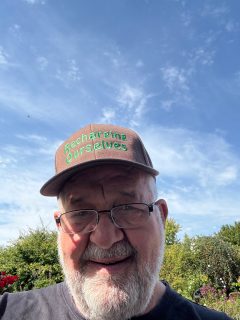
My New Book! Recharging Ourselves: Strengthening Our Community Through Kindness


My new book, Recharging Ourselves: Strengthening Our Community Through Kindness, is now available at Amazon  and Barnes and Noble

We are all builders and architects of community. By telling our stories and the stories of our neighbors, we explore our community’s strengths and the tools to improve everyone’s lives. This collection of essays and stories celebrates rural America in the 21st century, and digs into the challenges we face. These essays also celebrate where we have come from and how we are going to further build our communities, inspire our youth and collaborate for a brighter, healthier future.

The book is an exploration of community life in rural America, examining mentoring, volunteerism, community action, relationships, nature, and education.  I look at community life through the lens of civic engagement and empowerment of individuals to change community values and institutions. We are the forces for change. By telling our stories, and encouraging others to tell their stories, we come together, we become the builders and educators, the leaders for meaningful change. 

A Look at Tillamook County, Oregon’s Needs by the Numbers


                                    By Neal Lemery

                                    (Published in the Tillamook County Pioneer, 7/7/2025)

            A friend asked me the other day what they might do to help the community. They wondered if we had significant poverty and other social issues. I told them to take a good look around and become aware of what seems so obvious to many of us. I researched some alarming statistics, which are likely outdated, understated, and under-reported.  These numbers paint a disturbing picture and are a call to action. 

            Oregon State University and the Ford Family Foundation have assembled an insightful look at where our county is at in terms of our well-being, health, and educational needs. https://www.tfff.org/wp-content/uploads/Tillamook-CountyProfiles-2024.pdf

            46% of our households experience financial hardship (12% live below the federal poverty line, 34% below the Asset Limited, Income Restrained, but Employed (ALICE), which means they don’t have enough income for their basic needs).  That 46% compares to 29% nationally.

            11% of the population has food insecurity.17% of our kids live in poverty.

            33% of our population has a third grade reading level or less; 21% have a fifth grade math level or less. 

            We pay more property taxes ($2,296 per person) than the state average of $1,862.

            Our two-year-old kids have only a 56% vaccination rate (Oregon has a 68% rate).

            Our mental health providers have a ratio of 317 people per provider, but Oregon’s ratio is 148 people per provider.

            We live in a “child care desert” with 7.9 providers per 100 kids. The state ratio is 18.4 providers per 100 kids.

            With the oncoming cuts in SNAP benefits and Medicaid (the Oregon Health Plan), these local statistics and the impact on our neighbors and our community will only become more challenging.  There is talk about not keeping local hospitals and clinics open, and cutting food programs in schools. 

            What my friend can do, and what we can all do, is become better informed, and more involved in organizations that are taking on the social issues that these statistics mean to all of us. We all know people who are working in the professions that deal with the problems associated with poverty, education, health care, food supply, and the needs of kids.  Their knowledge, their experiences, and their passion for service and care of others are tremendous assets to the community.  

            We need more conversations, more engagement by all of us in these issues.  We need to be better informed, not only on the issues that these numbers represent, but how we can collectively address these problems, learn about solutions and how to become engaged in being our community problem solvers.  

            These numbers, and the daily struggle and challenge our community members have, are a call to action.  We need to have difficult conversations, and be the cause of “good trouble” as John Lewis famously said.  

As Margaret Meade said, “Never doubt that a small group of thoughtful committed individuals can change the world. In fact, it’s the only thing that ever has.”

–7/7/2025

On Freedom


                        By Neal Lemery  

(published in the Tillamook County Pioneer, 7/1/2025)

“Freedom, in its simplest form, is the power or right to act, speak, or think as one wants without hindrance or restraint. It’s often associated with liberty and autonomy, signifying the ability to make choices and act without coercion. In a broader sense, freedom can encompass various aspects, including freedom of speech, religion, and the press, as well as freedom from oppression and want.”  –Wikipedia

We live in society, living collectively, in a structured existence with certain expectations, common rules of behavior and conduct, and common beliefs on how we should behave. We pride ourselves on being free.  

Our common idea of who we are as a community, as a nation, is that none of us are “free” to act as we individually desire, to be anarchists. Instead, each of us has agreed to be part of the tribe, grouped together with common purposes and expectations, and obligations of citizenship.

 This acceptance of our “social contract” was extensively discussed during the Age of Enlightenment of the 18thCentury, and became the framework for the rise of democratic and republican institutions. It was the intellectual foundation of the American Revolution, a rejection of the tired social structure of monarchies and the divine right of kings. Abandoning the autocratic structures of feudalism, reformers advocated for giving voice to individualism and government based on popular, educated debate and majority rule. The Virginia Bill of Rights, the Declaration of Independence, and the US Constitution emerged from such thought and debate. 

That debate of our fundamental common principles continues today, as we refine and reshape our society and our governmental and economic structures. We owe it to ourselves and the entire community to respect and nurture these conversations, and to be meaningful, informed parties to those conversations. Such is the labor of a freedom-loving people.

True freedom is not anarchy, and does not thrive without a form of government that respects both individual voices and a collective acceptance of community good.  The implementation of individual rights and collective accountability often seem to be conflicting, but in that, both enlightened ideals will thrive and nurture both individual freedoms and society as a whole.

Our disagreements, our debates, our differences of opinions, our seemingly competing values are actually our strengths as a society. Vigorous and informed debates and conflicts sharpen our minds and strengthen our respective opinions and viewpoints.  The inquisitive mind and critical thinking are some of our greatest assets. In engaging in vigorous debate, we are truly fulfilling our respective obligations within our social contract, by being educated and active citizens, speaking our minds and giving deep consideration to the views and opinions of others.  

Freedom isn’t being able to do whatever I please, or say whatever thought pops into my head. Instead, I have obligations, part of the duties of being a free person, to delve into issue, research my facts, develop sound logical arguments, and engage in dialogue that is respectful of others, informed, and also open to change and reconsideration.

As a citizen, as a person who honors the concept of freedom, I am fulfilling my obligations as a citizen to be informed, to be questioning of my own opinions and the opinions of others, and to participate in the public forum with respect for others and the willingness to change my own views.  

Part of freedom is the duty to be a lifelong learner, a continuing gatherer of facts, and to engage in meaningful, respectful debate of the issues of the day. This is good citizenship.  And this is being an endorser of the principle of a free and just society.

Each of us is obligated to be a good and responsible member of the tribe, the village, the state, and the nation.  By revolting against the king, we have taken on the tasks of governing ourselves, through healthy, vigorous democratic institutions. Each of us has duties to work to strengthen and protect our democratic institutions, “to promote the general welfare and provide for the common defense.”  

8/29/2025

Thinking About Fathers’ Day


                        Thinking About Fathers’ Day

                                    By Neal Lemery

Father’s Day seems to only be an American custom of going through the motions of making an annual nod to the role of fathers and the state of fatherhood in this country.  Yet, we don’t talk about the real issues and concerns we should be addressing on this “special day for dads”.  We don’t have much in the way of national or community celebrations or observances. The few rituals are focused on barbecues, and perhaps attending a sporting event, the sending of a card, or the giving the cliché gift of a tie. 

I suggest we need a serious examination of how we support fathers and how fathers can improve their fatherhood skills, topics that aren’t now on the national “to do” list.  Do we really take fatherhood seriously? Are we even willing to talk about it?  Or is it just a Sunday in June when the weather is conducive for a family barbeque?

There are many challenges to be a father these days, and the perils and rewards of good parenting and also being the good son or daughter are often treated with silence and indifference.  Instead, the day is marked with a great silence, as if we don’t know what we really want to say, that we really haven’t given much thought to the importance of fatherhood in our lives.  Yet, the issues and challenges are formidable, and the effects of poor fatherhood ripple through our society with often deadly consequence. 

Some observers of American society have taken the time to look, and to gather some alarming statistics on the state of fatherhood in 2025.

“Men are much more likely to die of COVID…. But the increase among American men in deaths from accidental overdoses since the beginning of the century has been absolutely huge. Since 2001 it has amounted to the loss of an additional 400,000 men. That’s about the number of men we lost in World War II.

“Men are more likely to die from cancer, from cardiovascular disease—from all kinds of things. We need an office of men’s health. The Affordable Care Act should have covered something similar to the Well Woman visit for men. There’s a lot that could be done. But we have to start by acknowledging that there’s a sort of fatalism about the life-expectancy gap. 

“I’ve heard people say, “Well, men are bound to die younger,” but that hasn’t always been true. Also the gap can be two years, it can be six years, it can be eleven years, depending on where and when you ask the question. There’s nothing automatic about the fact that men are dying so much younger than women.”

                        —Richard Reeves, author of  Of Boys and Men: Whythe Modern Man is Struggling, Why It Matters, and What to Do About It (2024). 

In the 2020s, fewer men than women attend college, and women are more likely to enter professions. Boys are more likely to drop out of school. 

Reeves also writes: “There needs to be more investment in male-friendly forms of education and learning. That could include apprenticeship, career and technical education, and also extracurriculars; these show better outcomes for boys and men. I’m very worried about the decline in participation in sports among boys, so maybe supporting some coaching initiatives. Also fatherhood programs, ways to keep fathers in their kids’ lives, especially if they’re not living with the children. And supporting men’s mental health generally. There is a suicide crisis among young men, who too often suffer from loneliness and disconnection.”

            How can we support men and encourage them to be healthy and progressive fathers? How can we provide our youth with the tools to be the kind, thoughtful, and inquisitive kids that we want to see grow into healthy adults and become good citizens and parents?

            Yes, we live in challenging times.  And, yes, we are busy with our lives and often have difficulty in being good parents and family members.  Yet, Fathers’ Day offers us a space to reflect, to ponder, and to have conversations on what good parenting is, what needs to happen in our work as parents and family members.  Maybe there are some skills and some conversation topics that need to go on a list on the refrigerator. Maybe we take the time at the family barbeque to share our hopes and dreams, and to express some heartfelt gratitude about parenting and love and family. 

            Let’s make this Fathers’ Day a day of celebrating family love and the potential in each one of us to be a loving, kind, and thoughtful person.  

6/13/2025

Graduation Inspiration


                                    Graduation Inspiration

                                    By Neal Lemery

(Published in the Tillamook County Pioneer, 5/26/2025)

            I made a serious run on the graduation card rack at the store this morning.  Four great nephews and nieces are graduating in the next few weeks. I needed to fulfill my duties as a great uncle, to acknowledge their achievements, give them a round of applause, and note their collective plans to go on to college.  

            Inspiring cards were selected, along with some gift cards. Giving money for college expenses is part of the family tradition, too.  Inspiring, heartfelt messages need to be composed, to go along with the cards and money.  The older generations need to speak out, and proclaim their praise and kudos to yet another generation of college-bound kids. 

            Each of them has already started on their college career, with dual credit classes as high school seniors, visits to college campuses, and early applications for admission.  This uncle sees them as bright, ambitious, and starting to live their dreams of being responsible, resourceful adults.

            These accomplishments continue a community and a family tradition, of getting out in the world and finding a useful, satisfying career, and to give back. 

            This is a time to remember and celebrate the ancestors, too, with visits to cemeteries, and taking some time to ponder their lives this Memorial Day weekend. The ancestors were big advocates for education, traveling the Oregon Trail and later paths of emigration to the Northwest, eager to homestead farms, build schools and raise families who had brighter opportunities.  They, too believed in getting an education.  

Settlers to Oregon established numerous colleges and academies. Schoolhouses were one of the first community buildings erected in new settlements. Property taxes were assessed to fund schools. When Oregon was surveyed, and homestead sites were platted, one section (a square mile) of every township (36 square miles) was designated as a community asset for local schools.  Today, Oregon has numerous private universities and a flourishing state university and community college system. 

Funding and administrating our public school system remains a vigorous topic of our politics, and schools remain a core value of our culture. 

            A century ago, my grandmother had a dream: a college education for each child. She did some research, and then moved her family from a Canadian prairie wheat farm to the Willamette Valley, where there were a number of colleges.  Two of my aunts and all three sons earned graduate degrees. Not a bad accomplishment in the 1920s and 1930s. 

            When I was six and she was 84, she gave me the same heartfelt, forceful message, insistent that I work hard to better myself and live a productive life.             

Now, I am in the oldest generation, and can look ahead two generations to see family members who have worked hard and be set in their ways to advance themselves. Our family has been around here for nearly 180 years, and the path to self-improvement and building community is a well-worn, and expected, road. When I talk with young people about their future, I hear my grandparents and parents’ voices, urging “get an education”. 

            At the funeral of a family matriarch who was a strong advocate for education in my wife’s family, the minister asked the crowd who among them had pursued an education because of her urgings and counsel. Over one hundred people raised their hands. Her encouragement continues to motivate and inspire young people today. She left a powerful and long-lasting legacy. 

            This graduation season, my family’s graduates are also getting a book, The Man Who Planted Trees, by Jean Giono. It’s an allegory, a story of a shepherd and war veteran who transforms a community devastated by war, into a new forest, a place of hope and possibility.  More than tree planting, the work lifts people up, spreading optimism and self-confidence.  It is a lesson in restitution, giving back by helping nature recover, of bringing new life to a devastated community.  The tree planter does his work without seeking fame or fortune, and quietly does his work behind the scenes, anonymous.  

            We can all be tree planters, making a difference from a simple act every day. If you look around, there are a lot of people among us who make a difference, quietly, and persistently, acting with love, kindness, and hope. 

            I see that same drive and passion for self-improvement in today’s immigrants, reminding me that the flames for self-advancement and hard work continue to fiercely blaze, changing lives and our community. That energy and drive is a welcome strength and vital asset. 

The voices of our community advocates for education continue to be heard and listened to. And for that, I am grateful. 

5/26/2025

A Few Lessons in Compassion and Caretaking


                                    By Neal Lemery

            (Published in the Tillamook County Pioneer, 4/3/2025)

            This week, life gave me some perspectives of my role in community building and healing.  It was time for me to be in school, and to get reacquainted with taking a positive, proactive role, to quit my bellyaching and whining, and take some positive action. 

            A friend invited me to coffee, seeking some guidance and direction on their new role parenting a young relative.  They thought I had some wisdom on the subject, but I suspect they were more in search of affirmation and encouragement, with me as a cheerleader and proverbial optimist.  I can certainly play the role of cheerleader, and have the scars to prove I’ve played the role of a parent of teenagers.  

            Yet, I celebrate my role as parent, having just had a rich conversation with one of my sons this week. That unexpected phone call was filled with rich stories, laughter, and his comment that he had called “just to hear your voice”. Our talk about relationships, marriage, and our mutual desire to keep learning affirmed my thoughts that I’d done a decent job with him.  

            At coffee with my friend, I listened, commiserated, encouraged, and offered a few suggestions.  My friend thought I was a genius, as they acted on my ideas and found success and affirmation. My theory is that they instinctively knew the answers and the ideas had ripened and were well received.  They had done the hard work, and just needed to see they were headed in the right direction.  It’s not too hard to give a gentle nudge when people are already doing the right thing.

            It was a reflective week, as well.  A friend had given a talk about their passion in cleaning cemetery headstones, and helping families find their heritage, while sharing some nearly forgotten local history.  In that work, they celebrate the lives of those who have gone before us, and giving us all a sense of foundation and heritage.  

            I took that message to motivate me to visit my own family graves, and do some much needed maintenance and rehabilitation.  As I stood there in the cemetery, gently brushing off old leaves and debris and applying a cleanser to wash off decades of gunk, I took a good look at the names, and the dates of birth and death.  I ruminated over all the good times and hard times represented by the dashes between those dates, and the impact those ancestors had on me. 

            It was a time of contemplation, gratitude, and respect.  I hadn’t taken the time lately to acknowledge their contributions to my life and the importance of the ancestors’ various roles in their raising of me.  Like most of us, I get caught up in the daily busyness and worries, and ignore who I’ve become and why.  A lot of that comes from those family members whose headstones I was cleaning. A few tears came, and also a flood of good memories and gratitude.  

            These days are abundant in harsh words and comments, with people taking the opportunity to be snide, hostile, and even indifferent to another person’s crisis.  The daily news cycle overflows with crisis and uncertainty. I’m trying to limit my exposure to social media and its recent abundance of nastiness, and political discussions having a dominant theme of adversity and opposition. I want all that clamor to instead be a vehicle for addressing challenging community needs.  

            I left the cemetery, and that coffee shop after seeing my friend, with a new sense of gratitude and peace, knowing that in life, we do a lot of good things, and help a lot of people on their own walks in life.  The daily news cycle may seem important to people now, but knowing that I’ve been both the giver and the recipient of good thoughts, support, and kindness is worthy of my celebration and thanks.  That’s where I need to put my focus and my love.

4/2/2025