Rehearsing the Interview


I never know what to expect when I visit one of my young men at the Youth Authority camp. They have busy lives, and have a lot on their mind. What I might plan to do isn’t what is going to happen. It’s my job just to listen and just show up. What we do with our time together is their choice.

“Jack” usually wants to talk about his work outside, sorting and delivering shrubs for the estuary and streambank restoration work they do for the state department of forestry and other agencies. These young men help run the largest native plant nursery on the Oregon coast, and their efforts have helped restore salmon habitat for hundreds of miles of streams. We all benefit from their hard work, but they seldom receive any credit.

Today, though, he sits down at our table, looking neat and professional in his dress shirt and fancy tie. His pressed black pants complete his new look.

“I’m doing a job interview today,” he grins. “Part of our class on getting ready to enter the work force.”

He’s fidgeting with his tie, not knowing what to do with his hands.
“I’ve always bombed a job interview,” he said.

I get him talking about the class, and what he’s interviewing for. His passion is the medical field, and he often tells me about his dreams about working as a first responder, or a nurse in the emergency room, maybe even a doctor. I’ve wondered where that came from, but he’s never talked about it.

“It’s a medical job, at a hospital,” he said.

“Oh, then, let’s practice,” I said. “Get you warmed up, at least.”

He smiles, and leans forward, giving me the nod.

“Good morning, Dr. Jackson,” I said. “I’m glad to meet you. I’ve been looking forward to this interview for our position here at the hospital for a pediatric physician.”

He nods again, and gulps. This is the real deal, and his serious game face is in place. He runs through his resume, and his experience in working with sick and injured people, and how he’s enjoyed having his first aid and CPR card.

“How did you become interested in medicine, and being a care provider?” I ask, in my best hospital CEO voice.

His eyes look deep into mine, and his voice lowers, telling me the story of a family member’s tragedy, how he was the first person at her side, how he administered first aid, summoned the ambulance, and stayed with her until the emergency room doctor sewed her up.

His telling of the events was by the book, meticulous, and calmly professional. A family member was close to dying, but he was the professional, the guy in charge.

“The doctor told me I’d saved her life,” he said. “And, I guess I did. But, ever since, I’ve always wanted to know more about medicine, and how to save people.”

Tears flooded my eyes, as this young man opened up his heart to me, letting me inside of his young soul, sharing a seldom-told story. Six months of visiting him, and I’d never imagined the intensity of his desire to help others, to literally save lives.

Our mock interview before a mock interview continued, but nothing was pretend with us, as the reality of his feelings and of his desires to work as a medical professional filled the space between us.

A few minutes later, we wrapped up the interview, and I shook his hand.

“It was a pleasure to meet you, Dr. Jackson.”

We both took a breath, letting out deep sighs.

“That was great,” he said. “I think I nailed it. First interview I’ve had that went really well.”

His grin told the story. We both knew he was ready for the “real” interview in fifteen minutes.

I don’t know if we’ll ever talk again about his story with his family, and how he saved a dear one’s life. And, perhaps we don’t need to. We’ll just leave it there on the table, in the interview room where I first met Dr. Jackson.

5/18/16 – Neal Lemery

Taking A Moment To Be Still


It was unusual for me, just sitting there in my garden, being still and looking around.

I’d had a long session with the trowel, the weed eater, and my hand pruners, attacking the weeds, setting out some plants, and generally tidying up my shade garden. Sweaty, dirty and tired, I found a chair and a bottle of water and decided to catch my breath.

At first, I looked at what I’d done, and what I needed to do, mentally composing additions to my “to do” list.

This is becoming a job, I thought. Gardening is a lot of work, and I’m tired.

Maybe I should just take a moment and enjoy all of this, my own quiet corner of the world. I could let the sweat dry, thinking its OK that I just take a break.

Lately, when I’ve been reading about gardening, I’m nose deep into the science and the methodologies about how to grow the best of whatever is involved in my latest garden project.

In the midst of research on an interesting new plant, I’d come across a quote about gardening and my soul.

“It doesn’t matter what you do, he said, so long as you change something from the way it was before you touched it into something that’s like you after you take your hands away. The difference between the man who just cuts lawns and a real gardener is in the touching, he said. The lawn-cutter might just as well not have been there at all; the gardener will be there a lifetime.”
― Ray Bradbury

Take a moment, take a breath, and enjoy the garden for what it is, I reminded myself. Too often, my time here becomes an obligation, a project. Hurry up, get it done, and move on to the next task.

But, I am a gardener, not a laborer. Gardening really is nurturing, and being IN the garden. It is a time to nurture this place and my soul, to find peace, to let my mind be still and just BE. After all, I am a human being, not a human doing.

And, so I became still, and sat there. A swallow was building a nest in the new birdhouse, a hummingbird was enjoying the honeysuckle in bloom, sunlight played on the rhododendron bursting out in full glory. I breathed in the fresh air, and all the smells of spring.

In the distance, a neighbor was mowing her lawn, and a farmer was tilling his field. Off in the forest, a logger’s chainsaw provided the bass line for the house finch’s serenade in the snowball bush.

The real beauty in the garden, I realized, was not all the work I’d done, though I certainly had provided some tidying up and structure to this little piece of paradise. But, I realized, the real joy in this place is all the creatures and plants that make this their home.

I’m only the host, and I only add a few of the finishing touches.

And, I realized, the most important part of my job here, as a gardener, is to sit in a chair, and just be here, finding my own peace, and be part of this magnificent paradise, to simply be in this moment.
5/16/16

Under Construction


My town is going through some big changes. The state highway department is starting a major project, re-routing the intersection of the two major highways that funnel all the tourists, and most of the locals through downtown. A familiar motel and two restaurants have been reduced to rubble and hauled away in huge trucks.

And the city has decided to join in the chaos, by renovating and replacing most of the water mains in the downtown area. Ditches are dug, covered with temporary steel plates, and new water main pipes are finding their way beneath the torn up streets.

Yet, there is more afoot here than meets the eye. Other renovations are underway, more fundamental, and more in the realm of revitalizing our spirit.

A major shelter and service center for homeless people and folks fresh out of the local jail and prisons has opened, offering on site services and a healthy path to personal dignity and reformation.

The community college is building a brand new building, and offering new programs, bringing together other agencies to collaborate on problem solving and innovation.

Even our estuaries are getting a fresh start. Large scale work is underway to open up sloughs, take out dikes, and renovate tide gates, revitalizing our estuaries, restoring salmon habitat, improving movement of flood waters, and re-creating a healthy environment for fish, birds, trees, and reviving an essential part of our web of life. We even decided not to squabble about the project, working together in a collaborative fashion to reduce winter flooding, improve salmon habitat, and literally finding and improving our common ground.

In that work, our young people have led the way, taking their education on improving the world out into the waterways, teaching us biology, flood dynamics, and cooperative learning and problem solving.

Other youth are growing native plants for streambank restoration, raising salmon, and developing community gardens. Learning at school now includes getting out and making our world a classroom, giving us all a new paradigm of what education means.

Farmers are studying improved agricultural techniques, working with others to be better stewards of the earth, implementing new methods, and testing out new crops.

Volunteerism is rampant and a wide range of non-profit activities fill the community calendar.

The coffee shop where I hang out is abuzz with meetings and gatherings. Familiar faces, but folks who are busy developing new programs and taking on long standing problems.

“We can do it,” is the attitude now around here, and changes are coming, driven by a common desire to do something meaningful and make this corner of the world a better place.

It is fundamental change, not from the top down, not from the politicians in Washington, but instead, its coming from my neighbors, and my community, and those quiet conversations next to me in the coffee shop.

–Neal Lemery 5/3/16

Mending the Broken Ring


Mending The Broken Ring

He was all alone. He was good at pushing other people away, and didn’t have any friends in the unit where he lived. School was a battleground, too, with him struggling with his classes and his teachers. Much of life was just a big disappointment. It always had been, I sensed, in listening to him talk about his life, as we played our games of gin rummy every week.

No one had come to see him these last several years, and family wasn’t part of his life anymore.

Several of the prison staff had asked me to start coming in to see him. I’m a volunteer. Mentor, I’m called, but my real job title is Listener.

One hard day, he was almost in tears, and even during our visit, he was shouting out insults and snarky comments to the other guys in the unit, and a staff member who stopped to say hi.

“What can I do?” I asked. “Looks like you need a little help in getting along with everyone.”

“Oh, I’m OK,” he said. He looked down at the table, and a tear rolled down his cheek.

“Just play cards with me,” he said. “That would be great.”

Just be my friend, that’s what I heard from this man child, who was trying hard not to throw down the cards and break into a long howl of misery.

I shuffled the cards and dealt a hand. He wiped his tear away and picked up his cards. He had a good hand, beating me handily. A smile crept across his face, and he looked at me.

“Thanks,” he said.

“You’re a good man,” I said. “I like to come see you.”

He nodded, his eyes glistening again. He sniffled, and took up the cards for a new game.

After that, we got along better, and he was doing better with everyone else, too. I got to see his smile again the next visit. I heard happier stories about his day at school, and what he was doing in woodshop and work crew, where he sorted trees and shrubs, getting them ready to plant along streams, helping out the young salmon.

It was good work, hard and sweaty. But, he liked it. He liked being outside, learning about plants, and helping the fish; making a difference in something bigger than himself.

We never talked much, about things other than cards. Most of my questions got one word answers, or a shoulder shrug. But, I got a big hug when I was leaving, and the cookies I brought were carefully carried away to his locker, his hand tightly clenching the box.

“I just need to show up, and be the card player, the listener,” I said to myself. “No one else comes to see Jonathan, and it’s a big deal that I’m even here.”

A few weeks ago, he greeted me at the door, the deck of cards and a score sheet in his hands.

“I can’t wait to beat you,” he said, his face lit up with a smile.

We played a few hands, and then he put the cards down, and pulled a ring off of his finger.

It was an old ring, beaten silver with a turquoise stone in the center. On the back side, the silver loop had worn through, and the silver was cracked.

He held it in his hand, with a tenderness I had never seen in him before. His eyes focused on the ring, never looking at me, as he told me its story.

It was his great grandfather’s, a present on the day he graduated from high school. When he died, his grandfather wore it, until the day he died. Jonathan remembered the ring on his grandfather’s hand, and heard him tell its story.

When Grandfather died, his father wore it on a chain around his neck. Then, when Jonathan was fifteen, just before he was arrested, his dad took it off, and was putting it into a jewelry box.

He asked his dad about the ring, and why he wasn’t going to wear it anymore.

Jonathan choked up, mumbling something about his dad not caring about the ring anymore, that it didn’t mean anything to him.

“Can I have it?” he asked his dad.

And his dad said yes, giving it to Jonathan.

There was more to that story, but I didn’t ask. I saw pain in his eyes, and it wasn’t the time or the place for me to probe.

I’m the listener, I reminded myself. Just let him talk.

After his arrest and sent to prison, his family told the prison counselor they didn’t want to see him anymore, that he didn’t exist for them now, that he wasn’t part of the family.

But Jonathan had the ring.

“It’s your only connection with your family, isn’t is?” I asked.

I teared up as his eyes glistened, and he wiped away a tear. We both nodded.

“Can you get it fixed?” he asked. “It’s broken.”

“Sure,” I said. “There’s a good jeweler in town. He’ll do a good job.”

He held on to the ring, clutching it tightly in his fist.
I pulled off my wedding ring, showing him where the jeweler had mended it, making it a little smaller, to fit my finger.

“See, he did a good job with my ring,” I said.

Jonathan nodded, then looked down.

Twenty questions later, he knew a lot more about my jeweler friend, and what it takes to mend something that’s broken. He started to hand it over to me, then pulled back, putting the ring back on his finger.

“I don’t know,” he said, finally. “I have to think about it.”

“I’ll call you tonight, after you talk to the jeweler.”

“This is all about trust, isn’t it?” I asked.

“Yeah,” he said, after a pause. “Yeah.”

It was just the two of us in that room, him now alone in the world, locked up for something stupid he did when he was thirteen, and sent away to prison for four, maybe five years. And, everyone he’d ever known had walked away, leaving him to make his way, now a felon, a sex offender, the throwaway son.

I thought maybe Grandfather was there, too, the old man who let Jonathan sit on his lap, as he told him stories about great grandfather, and the ring, going to high school, and remembering good times, and a few successes in life.

When I left, the ring was still on his finger, the crack growing larger, the need to make amends and repairs still on his agenda.

A few weeks later, I showed up with some cookies, ready to play cards again. He showed me the ring again, telling me I should take it, get it repaired. After our card game, it was time for me to go. He slowly pulled the ring off of his finger, and handed it to me.

“Take good care of it,” he said. “It’s all I have of my family.”

“I know,” I said. “And, I will.”

On my way home, I stopped at the jeweler’s. Well, it was out of my way, but I was on a mission.

“It’s a beautiful old stone, real turquoise,” the jeweler said. “But, the break is beyond my talents. I’ll send it to a friend of mine. He specializes in this kind of work.”

It would take a few weeks, and he’d call me with an estimate.

Jonathan and I had talked about the cost. He was willing to spend a couple of hundred bucks. Money earned digging holes and planting trees, cutting blackberries. Hard, sweaty work, earning top prison wages, six bucks an hour.

That night, Jonathan called me, eager to hear what the jeweler said.

His voice dropped when I said it would take two weeks, and we needed an estimate.

“Don’t worry,” I said. “I’ve had the jeweler’s friend do work on a ring. He’s a real pro.”

Jonathan’s voice was soft. I could tell he was about to cry.

“It’ll be OK,” I said. “We just have to be patient.

The next few weeks flew by, at least for me. But, every time I went out to the prison camp, Jonathan would come up to me and ask about the ring.

About a week later, the jeweler called.

“It will cost $75,” he said.

“Do it,” I said.

The price was a lot cheaper than we’d imagined. It was time to move ahead.

Jonathan was amazed at the news, and he smiled at the price.

“Oh, wow,” he said. “I really can afford that.”

A week later, the phone rang. The ring was ready. I headed into town, my mission clear.

It was beautiful, no trace of the break, the ring now complete, whole. What was a torn gash was now a shiny clean band of silver, looking new. I slipped it into my pocket, and headed off to the prison, hauling precious cargo, family treasure.

“I have the ring,” I said, as I walked through the door.

“Let’s see,” he almost shouted.

The other youths gathered around. The ring had been a topic of his for almost a month now, and we circled around for the unveiling.

Jonathan tore open the small brown envelope, then paused to slowly pull open the tissue paper that was wrapped around the ring. His ring. His great-grandfather’s ring. His treasure.

It sparkled in the light, as he held it in his palm, carefully turning it this way and that, examining its newness with an intensity deserving of its treasured status.

“It’s beautiful,” he shouted.

Everyone else agreed, nodding with relief.

The treasure was back home.

“It fits perfectly,” he exclaimed.

He held his hand up, and then thrust it in the face of anyone who was willing to take a closer look.

He smiled, again, and let out a whoosh of air.

“Ah,” he said. “I got my ring back.”

Everyone smiled, as he danced around the room, clutching his ring to his chest.

This week, we’re playing cards again. I’m sure we’ll talk about the ring, and how wonderful it is now, all mended and shiny. And how it fits perfectly on his finger.

He’ll worry about me getting the check from the prison, his hard earned money paying me back.

But, I’ve already been paid, several times over. And, so has the jeweler. I told him Jonathan’s story, about his great-grandfather, and everyone else in the family, and how the ring is the only thing left for Jonathan when it comes to family.

The jeweler choked up and shook his head. And, I did too, on my drive out to the prison, thinking about that young man and what he has left in this world to remember his family by, about being broken and mended, and the lessons we’ve all learned.

The ring is whole now, just like when Great Grandfather wore it. It’s shiny and bright, just like new, just like Jonathan’s heart.

–Neal Lemery 4/25/16
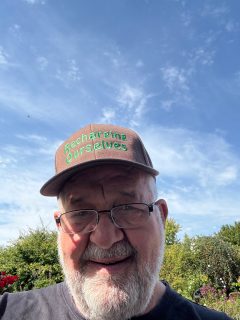
Becoming Worthy of Himself: Reflections on the Master Gardeners’ Class at OYA.


“Tim” is fully engaged. His hand flies up; he’s ready with the answer. This newest Master Gardener apprentice shares his observations, his conclusions, and where we should go next with our work. He’s read and re-read the text, and answered the homework questions with confidence.

Today’s topic in our Master Gardeners’ class is soils. Our teacher gets into it quickly, leading us through the various dimensions, the biology, the chemistry, the geology, and the mystery of it all. And Tim is in the middle of it, soaking it up, loving the complexity, and engaging in the thinking our teacher is calling us to do. His mental wheels are turning fast.

I’m Tim’s mentor, and today, a tutor, a teacher’s aide. My work is easy, a few words of encouragement, an occasional observation. I sit back and just enjoy him for who he has become.

A few years ago, he was lost. He’d done his required work in the youth prison, even finishing high school and then helping others. But, nothing fired up his passion, and life here was becoming just a matter of serving out the rest of his sentence.

Then, he discovered the garden, and the mystery of cultivating that is the joy and the passion of gardening. Wonderful things happened here, and he could be a part of that. He could be the magician and the scientist, the expert on various bugs and herbs, growing into a nurturer and a teacher. Tim was becoming the plant, sending out roots, spreading his leaves, and thriving in this newly discovered soil in his life.

Knowledge and the ability to be a part of the wonders of nurturing life, and exploring the unlimited world of plants and bugs touched his heart. He belonged in this work, and it fed his soul.

Now, the Master Gardeners class is his focus, and he has embraced it with everything in his being. He is in the midst of this class of questioners, deep thinkers in the ever expanding world of common, every day dirt.

I help him work through the math formulas and problems for the fertilizer questions. I watch him realize that the dull, abstract work in his math classes is nothing like the excitement of learning how best to fertilize his garden, and make his plants grow.

“This is fun,” he says.

He laughs then, shaking his head.

“I never thought I’d say that math problems are fun.”

We look at the slides of plants with various deficiencies from their soil, and talk about how to correct that, improving the plants by improving the soil and the nutrients, applying our newly found knowledge and thinking. He is becoming the botanist, the chemist, the scientist, the better lover of life itself.

He smiles, he scribbles notes, he’s totally absorbed in what we are doing, and where this class is taking him.

Tomorrow, he’ll be out in the garden, working his magic, growing his roots, growing into a healthy, complete man.

“We do not believe in ourselves until someone reveals that deep inside us something is valuable, worth listening to, worthy of our trust, sacred to our touch. Once we believe in ourselves we can risk curiosity, wonder, spontaneous delight or any experience that reveals the human spirit.” –E E Cummings.

–Neal Lemery 4/19/2016

Pursuing Your Education — Some Thoughts


Letter to a Young Man Who Is Wondering If He Should Pursue His Education

Ah, grad school. Of course, the answer is YES.

Education is one of the few things in life that is truly yours, that stays with you throughout your life. No one gets to steal it from you or tell you that you can’t have it, use it, and treasure it.

Developing your mind is one of the great opportunities a person has to truly grow and become what you potentially can be in life.

It is a lifelong journey, this education of one’s self. I’m a lifelong learner, and have a burning curiosity about the world and everything that is in it. And, part of that is learning about me, how I learn, how I think, how I see myself in this world. And, who I am, who I have been, how I have been conditioned and trained to live.

Sometimes, what I learn about myself isn’t all chocolate and roses, either. I am flawed, imperfect, not who I think I am capable of being. Well, good to know, so now I am challenged to improve myself, to change, and to become better, more of the person I can be. More importantly, I can become the person I should be.

So, you haven’t done this before. This challenge is new and different, and you have your doubts, your uncertainties.

Good, because that has also been true for you (and for me and for other thinking people) for every stage in our lives. And, it will continue. That doubting, uncertainty, is part of the growing process, part of the fuel that gets us out of bed in the morning, and ready to keep learning and growing.

Yesterday, C*** was talking about the chicks that are starting to hatch. Hatching is an enormous struggle. They have to do it on their own. If they get help, then they likely die. They have to turn themselves in the egg, positioning themselves in one end of the egg, by tucking their heads under their right wing, and making the move. Then, they have to peck a hole in the shell, to take their first breath of air. Slowly, they peck around a circle, so they have an opening to push themselves out of the shell and into the world.

It is hard work. They are exhausted. But, now they can grow and achieve their destiny.

We are like chicks. We have to struggle, and the struggle often takes a long time. We develop, we breathe, and we gain our strength. Much of the work is done on our own.

In that work, we find that we really do have the stamina, the resiliency, the determination to accomplish something. We own it. It is ours, this work, this moving ahead in our lives.

Others think that you can do this work, that you are worthy of it. You need to hear their voices and to realize that you are being supported and encouraged. We all need that.

So much of this world is about relationship. Yesterday, several of us in the garden had the opportunity to have a lesson on “please and thank you”. One youth didn’t think it was important, that he could just ask for something, and he’d get that, without those “unnecessary words”. Yet, those words are part of the relationship, the social contract we need to have in society to get things done and to interrelate with other people.

Grad school and the whole college experience is part of that process. Working together, and finding the role for you that helps get things done, that brings out your own unique strengths and tools, which also need to fit with others’ strengths and tools. The collective effort, the collective process.

“College” means a collaboration, a collective process.

You can have all the brains in the world, but if you can’t work with others, and communicate and interrelate, and collectively move forward with shared ideas and direction, then you are lost, and not very effective in life.

I think it’s important to have those college experiences where you interact and interrelate, where you collaborate. So much of life is based on those skills and those experiences.

Your guitar lessons are more than music theory and getting better at a particular song or chord pattern or strumming pattern. It is interaction, listening, responding, contributing, and collaborating.

One of the primary functions I serve when I come to OYA (the youth prison where I mentor youth) is to be a teacher of social skills. It is how to have coffee with someone, how to play cards, or talk. It is how to repot a plant together, or analyze a plant pest. Something more than the outwardly mundane task is going on.

I’m working as a judge again, part time, for a few months. So much of that work is about diagnosing and healing relationships, and getting people to interact with each other in an efficient, healthy way. The law is a tool for that, but the real work is the human interaction, where people can communicate in a productive, positive way. In many ways, judging is trying to heal society and social interactions.

And, so is the work of the educated person, working in relationship, and being effective in that work. Bringing people and ideas together, and developing solutions that are effective and meaningful. There’s a lot of education going on.

When I finished law school and the bar exam, I thought, well, my education is over with. Ha! That work had only just begun. I continue to teach myself, to have others teach me, and for me to teach others.

Grad school is about honing those skills, sharpening your mind so that you are even a better teacher.

I don’t want you to finish grad school when you are still at OYA. There’s the whole collaborative, collegial interaction process that you need to experience. I want you to explore the swamp with your fellow students, and muck around together, collaborating, interacting, and learning about each other.

Yeah, you are great at learning theory and the technical stuff on line and in books. But, I also want you to roll up your sleeves and interact with people like yourself, and really get to know each other, and have to work together, to collaborate. Yes, to be “collegial”.

You worry about what you would do if you don’t get into grad school while you are at OYA, and “have a year and a half with nothing to do”.

Grad school can wait. You are young. If you don’t find the “perfect fit” for you now, then there are reasons for that, and there are more opportunities in the future. And, your education isn’t miraculously done when you turn 25 either. It is a lifelong journey.

In that year and a half, you can create other options, other opportunities. You have a unique perspective, and you can teach others what you have learned, you can create new experiences for youth, and you can become a better researcher and writer.

You are also not limited in how many degrees you can get in your life, or skills that you develop and improve.

I took a year and a half off between college and law school. That time gave me great experiences, and I became a better, more purposeful person. That time made me a better lawyer, father and husband. It was not “wasted” time. I had a great job, which taught me so much about the world, and about myself.

We all have choices. We all have barriers. We can all sabotage our own efforts and our own opportunities, because we think we are “not good enough”. Yet, we have choices. We can choose to see life as a barrier, or as an opportunity.

My brief time with your Aunt *** allowed me to hear her very clearly impart to you some great wisdom, including looking at this time in your life as a great opportunity, a time to really see your own potential and your own skills, and do something with all that.

You heard her say that, from her heart, and you took that message deep into your own heart. Choose that message as your family legacy, and build something with it.

You are not wasting your time. You are, in fact, doing great things to improve yourself and to expand your potential. I hope you see that, and treasure all that for what it is—an enormous personal asset.

You know how to learn. You know how to move ahead. You know many of your skills and talents, and you know how to gain more skills and talents. Most people don’t know that, and the challenge of teaching others is to light that candle of passion and self curiosity, so that people can really see what potential they have.

So many of your peers haven’t lit that bonfire for themselves. They see the water glass of their lives as half empty, maybe even dry, rather than half full and having the potential of being a great flowing spring of water that will abundantly nourish their lives.

You’ve told me that one of your dreams is to make or raise a lot of money, so that others in prison can fully realize their dreams. You are learning how to do that for yourself right now, so you really are researching how to implement your dream. That is good work. Be proud of that work, and that dream.

This is a good time in life for you, and you are in a good process and experience. Enjoy it. Enjoy the doubts, the barriers, the struggles. There is no “bad outcome” in all of this. It is part of the journey.

Respectfully,

Neal Lemery

A Quiet Giving


Good things happen quietly, almost without anyone noticing.

Yesterday, at Costco, I helped an elderly lady load a large box into her car trunk. She was shuffling along, pushing one of those giant Costco carts, using her cane to move towards her car, in the rain.

The box was filled with boxes and boxes of pencils. Costco sized boxes, filling a much larger box. More than a couple of lifetime supplies of pencils. Maybe all the pencils Costco had in stock.

“That’s a lot of pencils,” I said.

“Oh, they’re for my kids, the kids at the grade school in my neighborhood,” she said. “Every couple of months, I donate pencils for all the kids there. They run out of them. Everyone needs a couple of good pencils.”

She shuffled to her car door, leaning on her cane, finally getting out of the rain.

“Thanks for your donation, and for helping out your kids,” I said.

“Oh, it’s nothing,” she said.

Just changing lives. Just making a difference in this world, one pencil at a time.

—Neal Lemery 3/16/16

Snow Geese and Spring


A friend sent me a photo today, the return of snow geese to Harney County, Oregon. There, the ground is still icy, and winter keeps its grip on the high desert of southeastern Oregon. Yet, as they have done for tens of thousands of years, the snow geese have returned, right on time.

In flocks of ten, twenty thousand, they swirl through the air; choreography by an unnamed master, above the still frozen marshes and the sagebrush stage of nature’s annual show.

Showers of hail blow through my yard, plunking my raincoat with pea-sized kernels of ice, fresh off a 70 mph storm roaring in from the Pacific. Still, the buds on the lilacs are swollen, and the daffodils and forsythia bravely show their colors.

I want to plant my new fig tree, just in from California. Yet, its new, tender leaves look too fragile for the remnants of this latest storm, and I tuck the tree next to the house on the porch.

“In a few days,” I tell it. “It’s supposed to warm up, and then I’ll plant you in your new home.”

I’m not sure I even believe what I’m saying. The calendar says spring comes next week, but the hills are white with late winter snow that has fallen in the last week or two. The wind cuts through my sweatshirt and raincoat, reminding me “not yet”.

Still, the robins are here now, racing around the lawn when the sun comes out, adding their song to the familiar tunes of their feathered relatives, who have endured this winter, keeping me busy filling up the bird feeder with their favorite sunflower seeds and suet cakes.

The cold wind has found my bones, and it’s time for my chair and a cup of tea.

“The snow geese are back,” I sing.

Another gust blows in, and I dance in my mud boots across the lawn, just ahead of the next deluge of ice falling from the latest black cloud; images of snow geese clouds swooping and circling in my head, me joining in their ballet over the frozen sage.

–Neal Lemery 3/13/2016

Tunings


We all need to tune ourselves and our musical instruments, to the key that best expresses our deepest emotions.

In the 1830s, cattle were brought to Hawaii, and turned loose. Soon, cowboys were needed to keep them out of the taro and sugar cane fields.

Mexican cowboys, (vaqueros, or in Hawaiian, paniolo), introduced the guitar to Hawaiians. They tuned their guitars in the Spanish style, which is still our standard guitar tuning. Hawaiians called the cowboys paniolo, Hawaiians loved the guitars, a new experience for a culture which had never seen stringed instruments.

When the paniolo left, they gave their guitars to their new Hawaiian friends.

However, they didn’t have instructions to tune them as the vaqueros did. New tunings, called “slack key”, pleasant to Hawaiian ears, came about along with new chord fingerings. New melodies and rhythms, expressive of the beauty and culture of Hawaii, emerged.

Their guitars became a part of their lives, the harmonies of the strings in harmony with their music and their community.

The young men I mentor are looking for their own harmonies, their own expressions. How do they tune their own lives, so that they can play their own melodies? They strive to find the chords to their own life songs.

They have plenty to sing about, giving voice to their emotions and experiences on their journeys.

Like the Hawaiians, each of them is finding their own tunings, looking for the right tension on the string to reflect their souls, striving for their own harmony.

Without tension, there would be no music played on a guitar, and without each string having its own unique sound, the songs would not find their own voice.

And, without their own challenges and questions about their lives, these young men would not be giving voice to their own songs, finding the chords and rhythms that are leading them into brighter days and a renewed appreciation of their own souls and dreams.

These young men, these modern day paniolo, are bringing order to their own cattle, and their own guitars, each with their own special slack key tunings, and melodies and rhythms unique to their own, newly focused and directed lives.

–Neal Lemery 2/7/16

Pruning Towards a Stronger Community


I’m a Master Gardener, a community service organization in my community, supported by the Home Extension Service of Oregon State University. We learn evidence based horticultural practices and share those practices and our love of gardening with the community.

One of our community service activities is hosting a community Pruning Day. We offer our pruning to folks who are unable to fully care for their gardens, and help shape up their gardens for spring. This year, I was in one of the twelve teams who visited people throughout the county.

The faces of the our team’s clients, elderly people who welcomed us into their gardens and homes, shined with delight and gratitude. Our team descended upon them, clippers and loppers in garden-gloved hands. We quickly set to work, creating piles of brush and gardens of newly ordered shrubs and trees.

Many hands made light work, and the tasks were quickly accomplished, along with the laughter of many eager hands.

The real gold of the day was hearing our clients tell us their stories, and the story of their garden and orchard, what that place meant to them, and how their work there had shaped their lives. The conversations turned into sermons of stewardship and reflection on well-lived lives. And, tears of gratitude were shed for our presence, and our time and work, our own love for their garden and orchard.

Afterwards, we gathered around the table, sharing their food, and continuing our conversations begun in the garden. There was a fellowship, with our new friends, and with each other. The joys of gardening and service were shared, along with homemade cinnamon rolls and cider pressed from the apples grown on the trees we had pruned.

We made connections, with the earth, with each other, and with lonely people who had their stories to tell.

Community was built on Saturday, one snip of the pruning shears at a time, and a reweaving and strengthening of the community fabric. We are all stronger because of that work, and that time together.

Our county is a better place today because of Pruning Day. Yes, gardens are neater, and orchards are now ready for a productive year of fruit growing. We have cut out the dead wood, brought light into dark places, and invigorated our orchards. Today, we have stronger community relationships with new friends.

—-Neal Lemery 3/7/16